1950s Documentary TV Shows
The 28 most popular 1950s documentary TV shows on Flickfolio, ranked by popularity. Click any show for ratings, reviews, trailers, and where to watch.
Panorama
1953
country: United Kingdom
Current affairs programme, featuring interviews and investigative reports on a wide variety of subjects.
The Sky at Night
1957
country: United Kingdom
Your monthly journey through the fascinating world of space and astronomy with the latest thinking on what's out there in space and what you can see in the night sky.
This Is Your Life
1952
country: United States
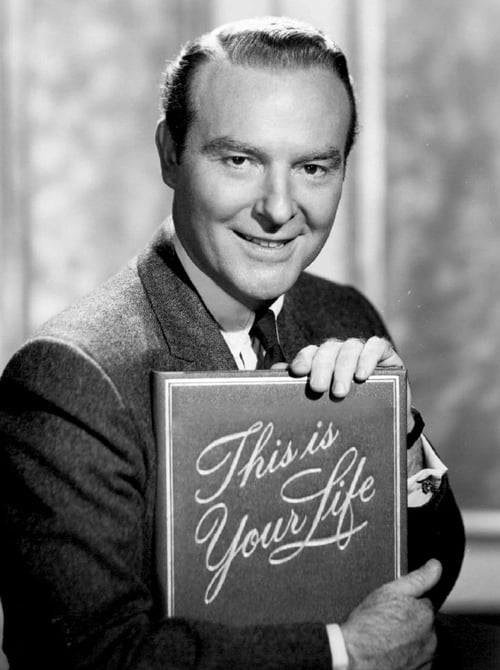
This Is Your Life is an American television documentary series broadcast on NBC, originally hosted by its producer, Ralph Edwards from 1952 to 1961. In the show, the host surprises a guest, and proceeds to take them through their life in front of an audience, including special guest appearances by colleagues, friends and family. Edwards revived the show in 1971-72, while Joseph Campanella hosted a version in 1983. Edwards returned for some specials in the late 1980s, before his death in 2005. The show originated as a radio show on NBC Radio airing from 1948 to 1952.
This Is Your Life
1955
country: United Kingdom
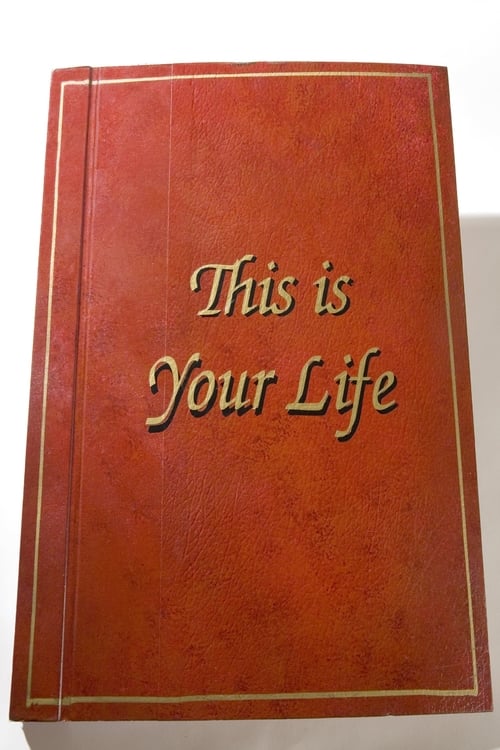
This is Your Life is a British biographical television documentary, based on the 1952 American show of the same name. It was hosted by Eamonn Andrews from 1955 until 1964, and then from 1969 until his death in 1987 aged 64. Michael Aspel then took up the role of host until the show ended in 2003. It returned in 2007 as a one-off special presented by Trevor McDonald, which to date was its most recent airing. In the show the host surprises a special guest, before taking them through their life with the assistance of the 'big red book'. Both celebrities and non-celebrities have been 'victims' of the show. The show was originally broadcast live, and over its run it has alternated between being broadcast on the BBC and on ITV.
Cinépanorama
1956
country: France
No overview available
The Twentieth Century
1957
country: United States
The Twentieth Century is a long-running CBS documentary television series that aired from 1957 to 1966, sponsored throughout its run by the Prudential Insurance Company and narrated by Walter Cronkite. Drawing on the resources of CBS News, the series produced both historical compilation documentaries and originally photographed contemporary reports, presenting major political, cultural, scientific, and social developments that shaped the modern world. Episodes combined newsreel footage, eyewitness testimony, and on-location reporting, covering subjects ranging from global conflicts and political change to arts, science, and international social transformation. Popular with audiences and critically respected, the series functioned as a formative model for later American television documentary programming and helped establish the compilation-documentary format as a central mode of broadcast nonfiction.
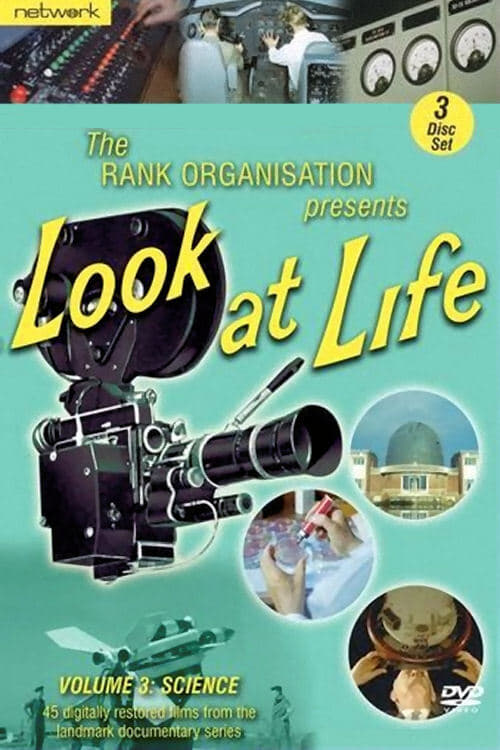
Look at Life
1959
country: United Kingdom
Look at Life was a regular British series of short documentary films of which 507 were produced between 1959 and 1969 by the Special Features Division of the Rank Organisation for screening in their Odeon and Gaumont cinemas. The films always preceded the main feature film that was being shown in the cinema that week. It replaced the circuit's newsreel, Universal News, which had become increasingly irrelevant in the face of more immediate news media, particularly on television with the launch of ITN on the Independent Television service, which began broadcasting in parts of the United Kingdom in 1955.

Monitor
1958
country: United Kingdom
Monitor was a BBC arts programme that was launched on 2 February 1958 and ran until 1965. Huw Wheldon was the first editor from 1958 to 1965. He was also the principal interviewer and anchor. Wheldon set about moulding a team of talents, including John Schlesinger, Ken Russell, Patrick Garland, David Jones, Humphrey Burton, John Berger, Peter Newington, Melvyn Bragg, Nancy Thomas and Alan Tyrer. Monitor ranged in subject over all the arts. Wheldon's Monitor lasted until he had "interviewed everyone I am interested in interviewing", and he was succeeded by Jonathan Miller for the series' last season.

Around the World with Orson Welles
1955
country: United Kingdom
A six-part British television travel series written, directed, and presented by Orson Welles for ITV in 1955. Filmed entirely in Europe, the series follows Welles through Vienna, the Basque Country, Madrid, Paris’s Saint-Germain-des-Prés, and London’s Chelsea Pensioners, blending travelogue, cultural portraiture, and personal essay. Moving between documentary observation and reflective commentary, the episodes combine interviews, local history, and Welles’s distinctive narration into a series that functions as both travel film and cinematic essay.
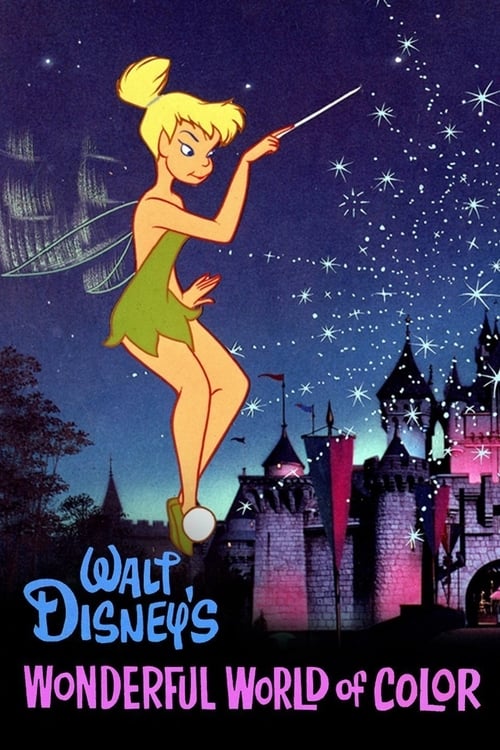
The Wonderful World of Disney
1954
country: United States
Walt Disney Productions has produced an anthology television series under several different titles since 1954. The original version of the series premiered on ABC, Wednesday night, October 27, 1954. The show, which was hosted by Walt Disney until his death and then from 1996 to 2002 by then-CEO Michael Eisner (with one-off hosts or no hosts during other periods) has since aired continually as either a weekly program or an irregular series of specials on several networks and streaming services, most recently on ABC and Disney+. The show is the second longest showing prime-time program on American television, behind its rival, Hallmark Hall of Fame. However, Hallmark Hall of Fame was a weekly program only during its first five seasons, while Disney remained a weekly program for more than forty years.

Reflets de Cannes
1954
country: France
No overview available
War in the Air
1954
country: United Kingdom
Interesting fifteen episode miniseries broadcast weekly by BBC in 1954-1955. It covers different aspects of the air war during World War II. It also briefly contextualises the development of aircraft immediately before and after the war.
Whicker's World
1959
country: United Kingdom
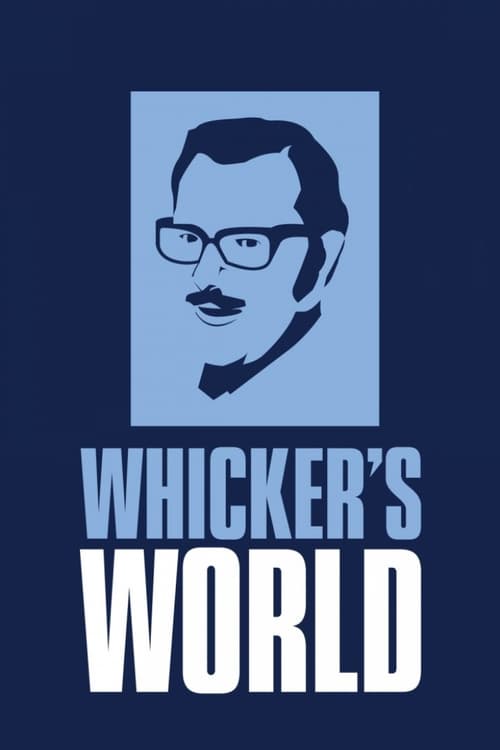
Whicker's World is an award-winning British television documentary series that ran from 1958 to 1994, presented by journalist and broadcaster Alan Whicker. Originally a segment on the BBC's Tonight programme in 1958, Whicker's World became a fully-fledged television series in its own right in the 1960s. The series was first shown by the BBC until 1968, and then by ITV from 1969 to 1983, when it was produced by Yorkshire Television, in which Whicker himself was a shareholder. The series returned to the BBC in 1984, and to ITV again in 1992.
Tekniskt magasin
1958
country: Sweden
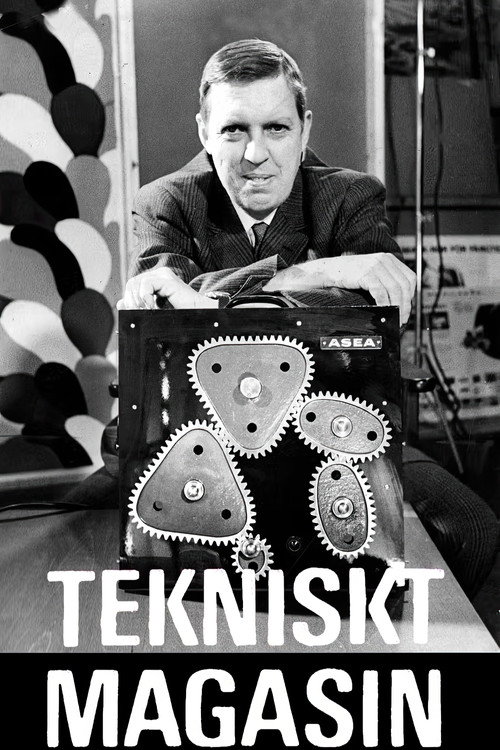
No overview available
The camera explores time
1957
country: France
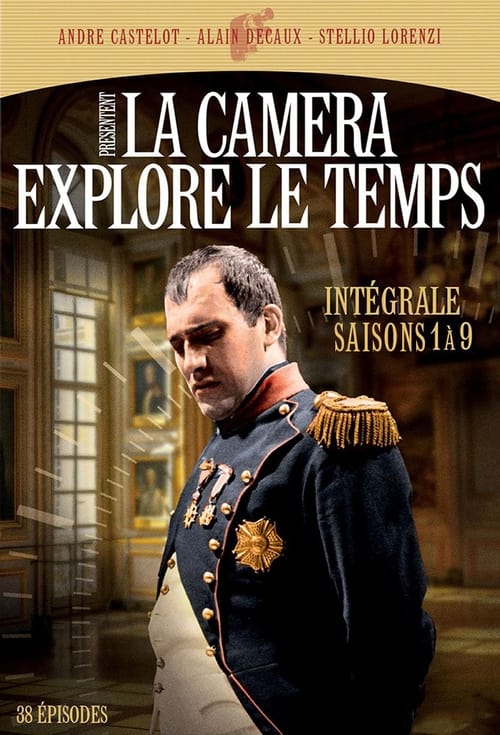
This French TV series from the 1950s and 60s explored historical events using dramatic reenactments, bringing history to life for its viewers.
Project XX
1954
country: United States
Early NBC series showcasing compilation films - documentaries made from existing archival footage. Patterned on the successful Victory at Sea, it employed fast-paced editing, music, and narration. Concentrating on public affairs and public life, it steered clear of controversial subjects and enjoyed strong ratings, inspiring many competitors such as Air Power and The Twentieth Century. In later years, however, it would be criticized as superficial in comparison to "serious" documentary and current events programs.

Zeit im Bild
1955
country: Austria
Zeit im Bild (ZIB in the logo, otherwise also ZiB) has been the name for the nationally and internationally oriented television news programs of the Austrian Broadcasting Corporation (ORF) since December 1955.
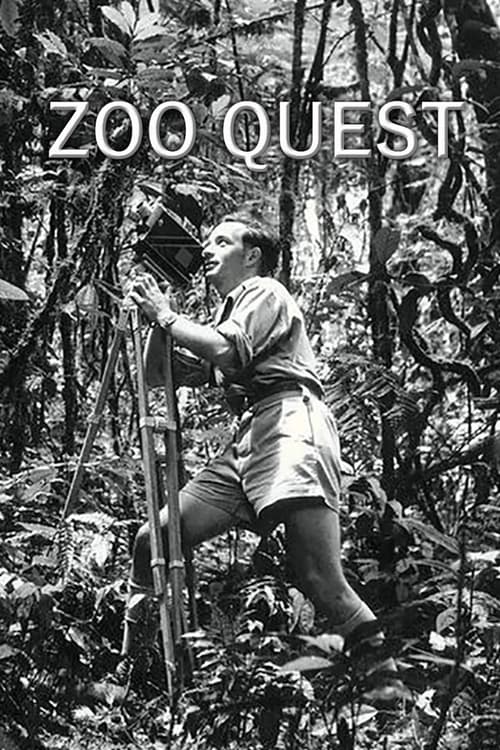
Zoo Quest
1954
country: United Kingdom
Documentary series starring David Attenborough who follows zoo keepers on a quest to find different animals to be added to the zoo. David Attenborough and a team from London Zoo travel in search of exotic animals. Their aim is to capture them and bring them back to the UK for exhibit in the zoo.
Out There
Out There
1951
country: United States
An anthology series adapting some of the science fiction stories of the time.
Expedition ins Unbekannte
Expedition ins Unbekannte
1958
country: Germany
No overview available
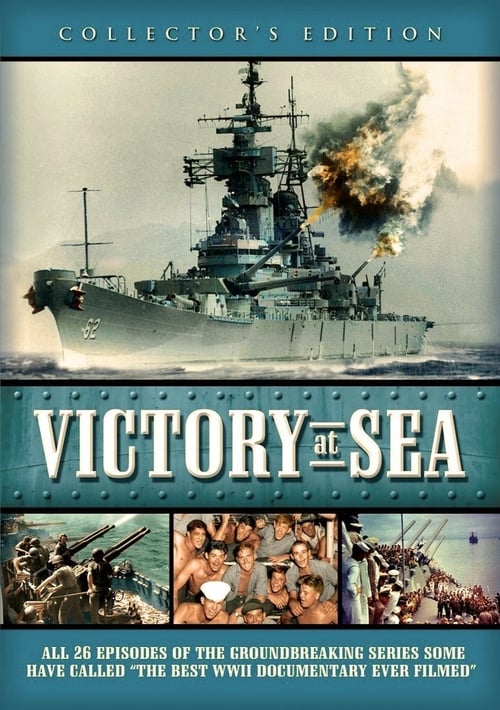
Victory at Sea
1952
country: United States
Victory at Sea is a documentary television series about naval warfare during World War II that was originally broadcast by NBC in the USA in 1952–1953. It was condensed into a film in 1954. Excerpts from the music soundtrack, by Richard Rodgers and Robert Russell Bennett, were re-recorded and sold as record albums. The original TV broadcasts comprised 26 half-hour segments—Sunday afternoons at 3pm in most markets—starting October 26, 1952 and ending May 3, 1953. The series, which won an Emmy award in 1954 as "best public affairs program", played an important part in establishing historic "compilation" documentaries as a viable television genre. Over 13,000 hours of footage gathered from US, British, German and Japanese navies during World War II were perused in the making of these compelling episodes.

CBS Reports
1959
country: United States
CBS Reports is a long-form documentary television series launched by CBS News in 1959, designed as a platform for in-depth investigative reporting and international documentary journalism. Distinct from later programs of the same name, the original series presented feature-length nonfiction reports on Cold War geopolitics, science and technology, war, social change, and global political systems, using on-location filming and extended narrative structures rather than studio news formats. It established a model for serious broadcast documentary journalism that influenced subsequent public-affairs and investigative television programming.
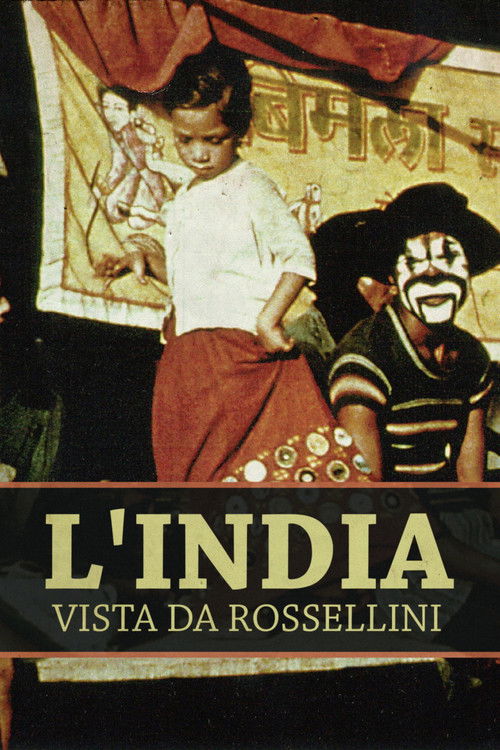
L'India vista da Rossellini
1959
country: Italy
In this long journey through India, with a total running time of 251 minutes, viewers have the opportunity to discover, among other things, the city of Bombay at that time, the fishermen of Versova, the eating habits of Indians, regions such as Malabar and Bengal, India’s diverse wildlife, and the work of then–Prime Minister Nehru, one of the most ardent supporters of Rossellini’s project.
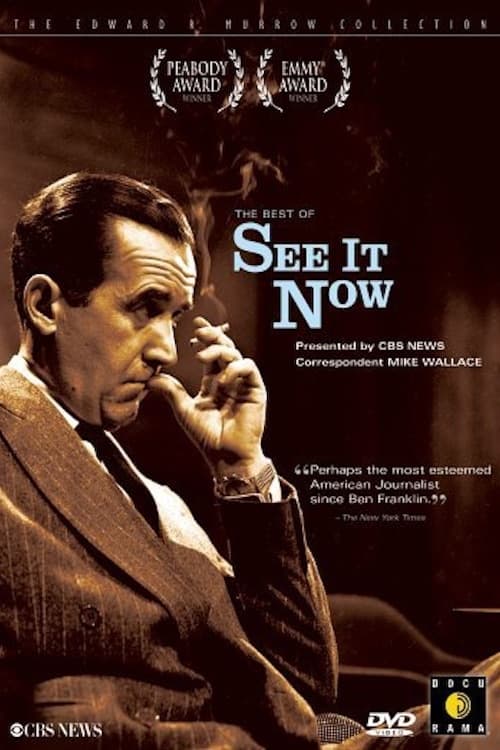
See It Now
1951
country: United States
See It Now is an American newsmagazine and documentary series broadcast by CBS from 1951 to 1958. It was created by Edward R. Murrow and Fred W. Friendly, Murrow being the host of the show. From 1952 to 1957, See It Now won four Emmy Awards and was nominated three other times. It also won a 1952 Peabody Award, which cited its
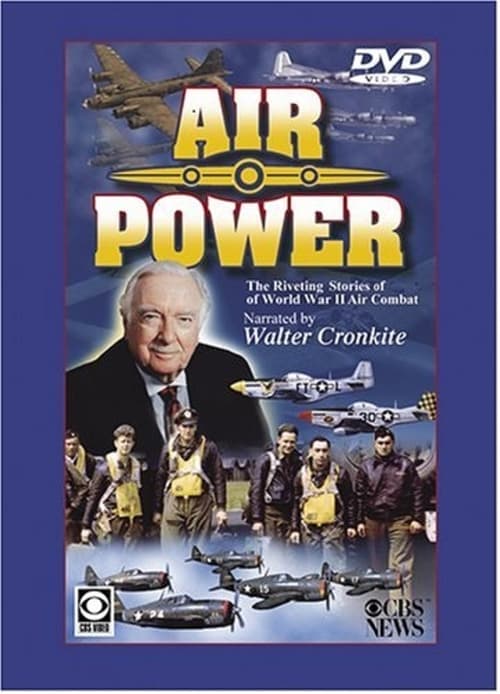
Air Power
1956
country: United States
Air Power is a historical educational television series broadcast during the 1956-1957 television season over the CBS television network dealing with the rise of aviation as a military weapon. It starred Walter Cronkite as the narrator and featured a musical score by Norman Dello Joio.
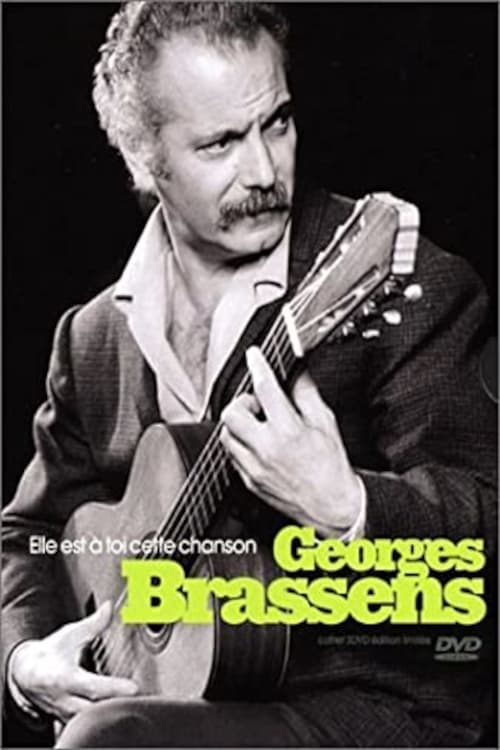
Georges Brassens - Elle est à toi cette chanson 1954 à 1979
1954
country: France
No overview available
Wide Wide World
1955
country: United States
Wide Wide World was a 90-minute documentary series telecast live on NBC on Sunday afternoons at 4pm Eastern. Conceived by network head Pat Weaver and hosted by Dave Garroway, Wide Wide World was introduced on the Producers' Showcase series on June 27, 1955. The premiere episode, featuring entertainment from the US, Canada and Mexico, was the first international North American telecast in the history of the medium. It returned in the fall as a regular Sunday series, telecast from October 16, 1955 to June 8, 1958. The program was sponsored by General Motors and Barry Wood was the executive producer. In March 1956, Time magazine reported that it was the highest-rated daytime show on television.

Brandpunt
1959
country: Netherlands
No overview available