Known for Camera
From Wikipedia Arthur Edeson, A.S.C. (October 24, 1891 – February 14, 1970) was a film cinematographer, born in New York City. He was nominated for three Academy Awards in his career in cinema. Edeson began his career as a still photographer, but turned to movies in 1911 as a camera operator at the American Éclair Studio in Fort Lee, New Jersey when it and many other early film studios in America's first motion picture industry were based there at the beginning of the 20th century. When the Éclair Studio was reorganized as the World Film Company, he was promoted to chief cinematographer assigned to the star Clara Kimball Young. Throughout the twenties, Edeson photographed a number of important films, including Douglas Fairbanks' Robin Hood (1922) and The Thief of Bagdad (1924), and the ground breaking special effects film The Lost World (1925). When sound came in, Edeson experimented with camouflaging the microphones in exterior shots. In Old Arizona (1929), the first sound film to be shot outside a studio, provided evidence to Hollywood executives that talking pictures need not be confined to the sound stage. The western was also the first film to be made in the 70mm widescreen process, known as "Fox Grandeur". In the early thirties, perhaps his most memorable creative partnership was formed with director James Whale, for whom he photographed the first three of Whale's quartet of horror films: Frankenstein (1931), The Old Dark House (1932), and The Invisible Man (1933). His principal work was on the side of realism, which is considered by most film historians to represent the "zenith of Hollywood photography." Edeson built on the influence of German Expressionism, brought to the America cinema by German cinematographers during the 1920s. In 1919, Edeson was one of the founders of the American Society of Cinematographers.
Born
October 24, 1891
Died
February 14, 1970 (age 78)
Birthplace
New York City, New York, USA
Filmography
112 films


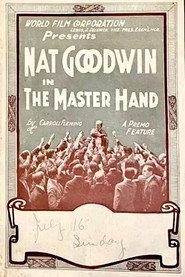
The Master Hand
1915 · 50m · US
James Rallston, facing financial hardship, marries a wealthy invalid widow with a daughter, Jean, and plots to control her fortune. He orchestrates her confinement in a sanitarium by drugging her and falsely claiming she is insane, with the help of a conniving doctor and sanitarium keeper. Fifteen years later, Rallston has lost Jean's fortune through speculation and seeks help from John Bigelow to recover it, offering Jean as a reward. Bigelow, suspicious of Rallston, discovers the truth about the widow and Jean's father, and rescues the widow from the sanitarium.