Known for Acting
Lew Ayres was born in Minneapolis, Minnesota and raised in San Diego, California. A college dropout, he was found by a talent scout in the Coconut Grove nightclub in Los Angeles and entered Hollywood as a bit player. He was leading man to Greta Garbo in The Kiss (1929), but it was the role of Paul Baumer in All Quiet on the Western Front (1930) that was his big break. He was profoundly affected by the anti-war message of that film, and when, in 1942, the popular star of Young Dr. Kildare (1938) and subsequent Dr. Kildare films was drafted, he was a conscientious objector. America was outraged, and theaters vowed never to show his films again, but quietly he achieved the Medical Corps status he had requested, serving as a medic under fire in the South Pacific and as a chaplain's aid in New Guinea and the Phillipines. His return to film after the war was undistinguished until Johnny Belinda (1948) - his role as the sympathetic physician treating the deaf-mute Jane Wyman won him an Academy Award nomination as Best Actor. Subsequent movie roles were scarce; an opportunity to play Dr. Kildare in television was aborted when the network refused to honor his request for no cigarette sponsorship. He continued to act, but in the 1970s put his long experience into a project to bring to the west the philosophy of the East - the resulting film, Altars of the World (1976), while not a box-office success, won critical acclaim and a Golden Globe Award. Lew Ayres died in Los Angeles, California on December 30, 1996, just two days after his 88th birthday.
Born
December 28, 1908
Died
December 30, 1996 (age 88)
Birthplace
Minneapolis, Minnesota, USA
Filmography
101 films, 59 shows


Altars of the World
1976 · 2h 30m
country: United States
This is the last film to ever win the Golden Globe as best Documentary, now an extinct category in the Globes.
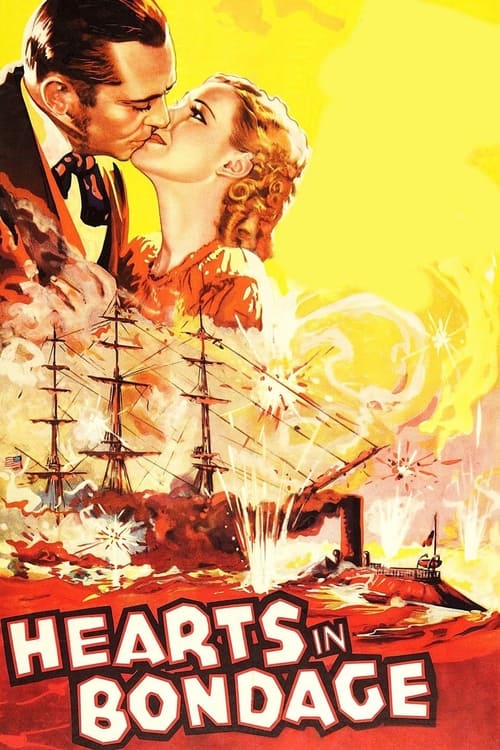

Hearts in Bondage
1936 · 1h 12m
country: United States
Best friends Kenneth Reynolds and Raymond Jordan are U.S. Navy officers, and Kenneth is engaged to Raymond's sister. But the eruption of the Civil War divides them, as Raymond stands by his native Virginia while Kenneth remains on duty as a Northern officer. Kenneth's uncle, John Ericsson, designs a new kind of ship, an ironclad he calls the Monitor. Eventually the war pits Kenneth, on board the Monitor, against his friend Raymond, serving aboard the South's own ironclad, the Merrimac (as it is called here). A naval battle ensues, one that will go down in history.