Movie NovelRelease Date ↓All GenresAll ErasAny RatingAny Runtime

TMDB3.5
FF3.0
I, Robot
2004 · 1h 55m
country: United States
In 2035, where robots are commonplace and abide by the three laws of robotics, a technophobic cop investigates an apparent suicide. Suspecting that a robot may be responsible for the death, his investigation leads him to believe that humanity may be in danger.
TMDB3.6
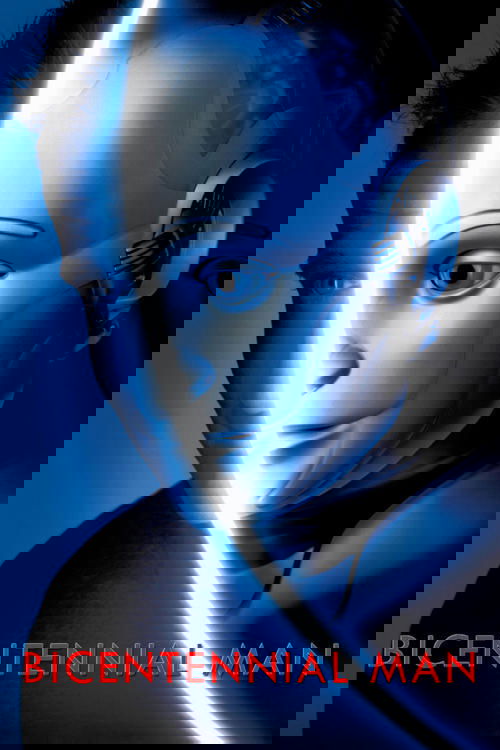
Bicentennial Man
1999 · 2h 11m
country: Germany
Richard Martin buys a gift, a new NDR-114 robot. The product is named Andrew by the youngest of the family's children. "Bicentennial Man" follows the life and times of Andrew, a robot purchased as a household appliance programmed to perform menial tasks. As Andrew begins to experience emotions and creative thought, the Martin family soon discovers they don't have an ordinary robot.
TMDB3.0
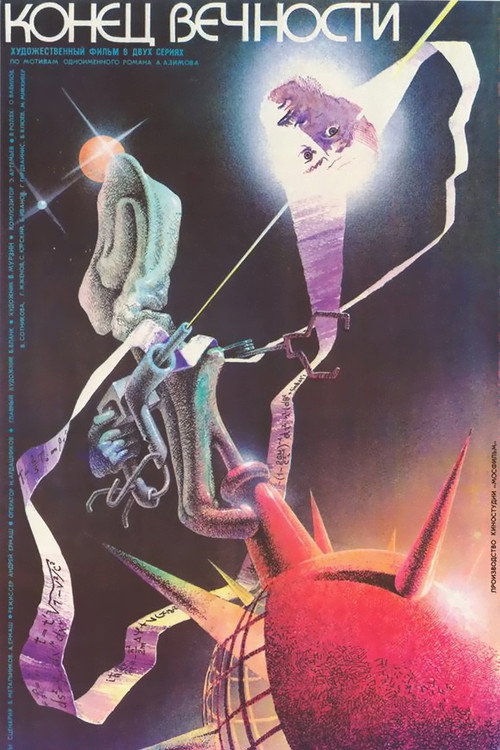
The End of Eternity
1987 · 2h 17m
country: Soviet Union
Directed by Andrei Yermash, and written by Isaac Asimov, Budimir Metalnikov, and Andrei Yermash, «Konets vechnosti» is a 1987 Science Fiction film, starring Oleg Vavilov, Vera Sotnikova, Georgi Zhzhyonov, Sergei Yursky, Gediminas Girdvainis and Boris Ivanov.
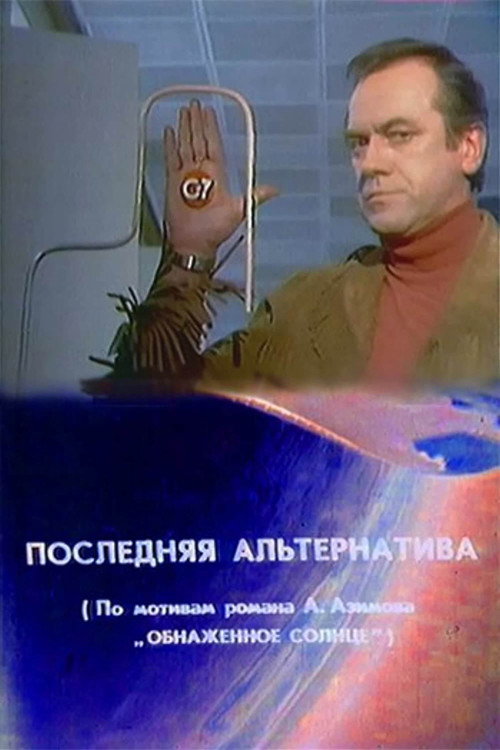
The Last Alternative
1978 · 2h 7m
country: Soviet Union
Detective Al Bailey is invited to one of the outer worlds, Solaria, where a mysterious murder has occurred. Solaria is characterized by the isolation of its inhabitants from each other (even husbands and wives see each other on a schedule), which makes the murder all the more incredible. From childhood, people grow up surrounded by robots, and as adults, personal contact is considered inappropriate and a difficult challenge. The unpreparedness of the inhabitants for the murder leads them to accept the invitation to bring in an Earthling. Upon arriving on the planet, Al Bailey meets his old acquaintance, the robot Dan, and they begin their investigation together.

TMDB2.0
The End of Eternity
1976 · 1h 19m
country: Hungary
Somewhere outside of time as we understand it is the timeless realm known as Eternity, where a group of highly trained technicians – drawn from all the Centuries under their control – have manipulated the Earth’s history to transform it into what they believe to be a perfect world, free from every disaster and hardship. But when Senior Computer Twissel sends a young Technician named Harlan to study the 480th Century in the company of a seductive woman, Harlan begins to suspect that Twissel may have some secret plan of his own which has something to do with the forbidden centuries before time travel was invented...

TMDB5.0
The Naked Sun
1969 · 50m
country: United Kingdom
Earth police detective Lije Baley and his robot associate, R. Daneel Olivaw, investigate an impossible murder on a planet where physical proximity is taboo but nudity is not.
El robot embustero
TMDB4.0
El robot embustero
1966
country: Spain

TMDB4.5
Sucker Bait
1965 · 58m
country: United Kingdom
An expedition sets out to discover what has happened to a lost colony on a distant planet. Amongst the scientists is a teenager raised to be a kind of human computer, able to make connections between different specialisms.

TMDB3.5
The Caves of Steel
1964 · 1h 15m
country: United Kingdom
In the future New York City, the Deputy Commissioner of Police is assisted by a robot detective in solving the murder of a scientist.