Movie DirectorRelease Date ↓All GenresAll ErasAny RatingAny Runtime
TMDB3.1
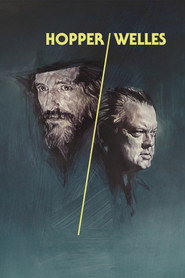
Hopper/Welles
2020 · 2h 11m · US
A restored 1970 cinéma vérité conversation between Orson Welles and Dennis Hopper, filmed during the production of "The Other Side of the Wind" and released in 2020 as a standalone documentary capturing their wide-ranging dialogue on cinema, politics, art, and fame in the early New Hollywood era.
TMDB3.4
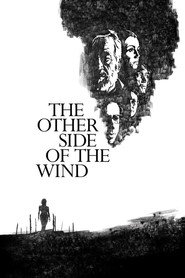
The Other Side of the Wind
2018 · 2h 2m · FR
At a media-swamped party to celebrate his seventieth birthday and screen his avant-garde film-in-progress, a legendary but jaded Hollywood director is faced both with voracious fans and unsettling questions about what became of his lead actor.
TMDB2.7
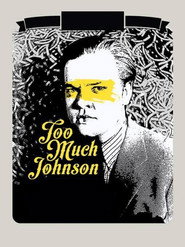
Too Much Johnson
2013 · 1h 7m · US
This film was not intended to stand by itself, but was designed as the cinematic aspect of Welles' Mercury Theatre stage presentation of William Gillette's 1894 comedy about a New York playboy who flees from the violent husband of his mistress and borrows the identity of a plantation owner in Cuba who is expecting the arrival of a mail order bride. The film component of the performance was ultimately never screened due to the absence of projection facilities at the venue. Long-believed to be lost, a workprint was discovered in 2008 and the film had its premiere in 2013.
TMDB3.5
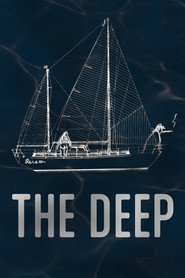
The Deep
2007 · 1h 51m · UK
An unfinished feature film directed by Orson Welles and based on Charles Williams’s Dead Calm (1963), filmed between 1966 and 1969 off the Yugoslav coast. Starring Welles, Jeanne Moreau, and Laurence Harvey, the project follows a newlywed couple whose yacht voyage becomes a psychological thriller after encountering a drifting vessel. The film remains incomplete, with missing scenes, unfinished sound, and surviving only in workprint form.
TMDB3.0
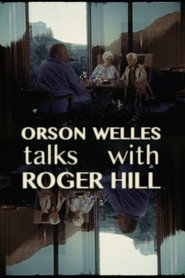
Orson Welles Talks With Roger Hill
2005 · 1h 2m
A 1978 filmed conversation between Orson Welles and his lifelong mentor Roger “Skipper” Hill, shot at Welles’s home in Sedona by Gary Graver. Edited from six hours of footage into a 62-minute documentary, the film captures their reflections on friendship, education, memory, and Welles’s formative years at the Todd School.
TMDB3.8
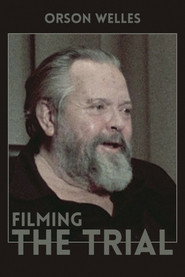
Filming 'The Trial'
2002 · 1h 22m · US
An unfinished 1981 essay-documentary project by Orson Welles, based on a filmed Q&A session at USC following a screening of The Trial, intended as a reflective companion piece to the film but never edited or completed during his lifetime. The film was edited and screened in the 2000s by the Munich Filmmuseum.
TMDB4.5
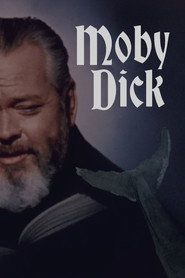
Moby Dick
2000 · 22m · UK
An unfinished 1971 film project in which Orson Welles performs readings from Moby Dick against a minimalist blue-screen setting, conceived as a stylized, abstract adaptation but never edited or completed. (Note: Not to be confused with Welles’s separate 1955 filmed stage project Moby Dick—Rehearsed.)
TMDB3.3
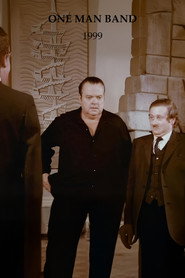
One Man Band
1999 · 29m · US
One Man Band (1999) is a posthumous archival reconstruction created by the Munich Film Museum from unfinished footage shot by Orson Welles between 1968 and 1971. The film assembles five comic vignettes—Churchill, Swinging London, Four Clubmen, Stately Homes, and Tailors—originally produced for Welles’s abandoned television project Orson’s Bag. Edited into a 29-minute composite short for festival exhibition, the film represents a curatorial reconstruction rather than a completed work authored or released by Welles. (Note: This is a posthumous archival assembly. The original unfinished project exists separately under the working titles London / Swinging London and was never completed or released by Orson Welles.)
TMDB3.8
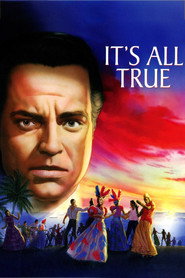
It's All True
1993 · 1h 29m · FR
A documentary about Orson Welles's unfinished three-part film about South America.
TMDB3.1
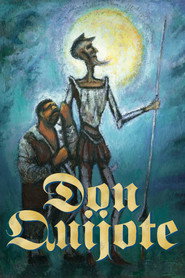
Don Quixote
1992 · 1h 56m · ES
A posthumous 1992 reconstruction of Orson Welles’s long-unfinished Don Quixote project, edited by Jesús Franco from footage shot between 1957 and 1972, following Don Quixote and Sancho Panza as they wander modern Spain in pursuit of chivalric ideals. (Note: This version represents a later editorial assembly, not a film completed by Welles.)
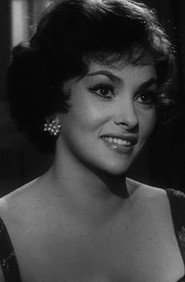
Unseen Lollo
1986
TMDB3.0
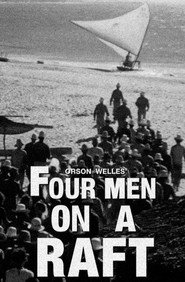
It's All True: Four Men on a Raft
1986 · 48m · BR
A dramatization of the heroic jangada voyage, from Fortaleza to Rio de Janeiro, undertaken by four impoverished fishermen to file grievances in person to their President.
TMDB2.5
The Dreamers
1985 · 23m · US
The Dreamers (1985) is a posthumous short film assembled by Oja Kodar from unfinished footage directed by Orson Welles in 1982. Edited after Welles’s death, the film derives from fragmentary material intended for an uncompleted adaptation of stories by Isak Dinesen. The 1985 version represents an editorial assembly rather than a completed work authored by Welles, presenting selected footage in a reconstructed form for archival circulation. (Note: This is a posthumous editorial reconstruction. The original 1982 project exists separately as an unfinished Welles work and was never completed or released by him.)
TMDB3.5
Orson Welles' Magic Show
1985 · 27m · US
Welles had a lifelong interest in magic, having been taught his first magic tricks by Harry Houdini in the 1920s, when Welles was still a boy. In this unfinished television special, filmed between 1976 and 1985, Welles performs various magic tricks for the camera, promising that no trick photography is used.
TMDB3.1
The Spirit of Charles Lindbergh
1984 · 3m · US
Orson Welles sits in his chair behind his typewriter where he sends a message out to his dying friend Bill Cronshaw: a passage from the journal of Charles Lindbergh.
TMDB3.7
Filming Othello
1979 · 1h 24m · DE
Filming Othello is a 1978 documentary film directed by and starring Orson Welles about the making of his award-winning 1952 production Othello. The film, which was produced for West German television, was the last completed feature film directed by Welles.
TMDB4.0
The Orson Welles Show
1979 · 1h 14m · US
An unsold 1979 television talk-show pilot hosted by Orson Welles, blending interviews, audience interaction, staged segments, and magic performances, filmed between 1978 and 1979 but never broadcast or developed into a series.
TMDB3.7
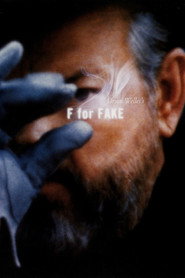
F for Fake
1973 · 1h 29m · FR
Documents the lives of infamous fakers Elmyr de Hory and Clifford Irving. De Hory, who later committed suicide to avoid more prison time, made his name by selling forged works of art by painters like Picasso and Matisse. Irving was infamous for writing a fake autobiography of Howard Hughes. Welles moves between documentary and fiction as he examines the fundamental elements of fraud and the people who commit fraud at the expense of others.
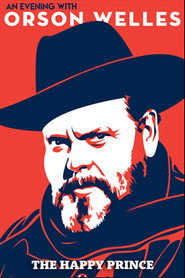
An Evening with Orson Welles: The Happy Prince
1970 · 30m · US
A half-hour studio reading in which Orson Welles performs Oscar Wilde’s The Happy Prince, created for Sears’ Cartrivision home-video system.
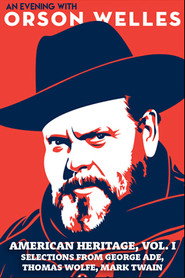
An Evening with Orson Welles: American Heritage, Vol. I – Selections from George Ade, Thomas Wolfe, Mark Twain
1970 · 30m · US
A half-hour Cartrivision program in which Orson Welles performs literary selections associated with American writers George Ade, Thomas Wolfe, and Mark Twain, produced for Sears’ home-video catalog.
An Evening with Orson Welles: American Heritage, Vol. II – Clarence Darrow
1970 · 30m · US
A half-hour Cartrivision program in which Orson Welles performs material attributed to Clarence Darrow, produced for Sears as part of the American Heritage home-video series.
An Evening with Orson Welles: Two Wise Old Men – Socrates and Noah
1970 · 30m · US
A half-hour Cartrivision program featuring two studio performances by Orson Welles on the figures of Socrates and Noah, produced for Sears’ home-video distribution.
An Evening with Orson Welles: My Little Boy
1970 · 30m · US
A half-hour Cartrivision studio performance by Orson Welles titled My Little Boy, produced for exclusive distribution through Sears’ home-video system as part of Welles’s six-film Cartrivision set.
TMDB3.5
An Evening with Orson Welles: The Golden Honeymoon
1970 · 30m · US
A half-hour studio performance in which Orson Welles reads Ring Lardner’s story The Golden Honeymoon, produced for Sears’ Cartrivision home-video catalog.
TMDB2.6
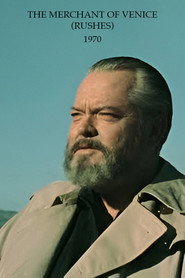
The Merchant of Venice (Rushes)
1970 · 31m · US
A standalone archival recording of Orson Welles performing Shylock’s “Hath not a Jew eyes” monologue, filmed independently in the early 1970s and unrelated to the 1969 Merchant of Venice production. Preserved as 16mm rushes at La Cinémathèque Française and restored in 4K in 2025, the footage documents an isolated performance rather than a narrative film project. (Note: Separate filming event; not footage from the 1969 TV adaptation.)
TMDB4.0
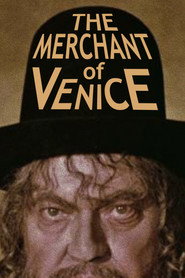
The Merchant of Venice
1969 · 36m · US
An unreleased 1969 made-for-TV short adaptation of Shakespeare’s The Merchant of Venice, produced, directed by, and starring Orson Welles. Originally part of the abandoned CBS special Orson’s Bag, the completed film later became partially lost due to missing workprints and sound elements, surviving only in fragmentary form until a reconstructed restoration premiered in 2015.
TMDB3.6
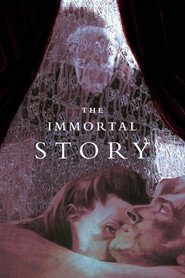
The Immortal Story
1968 · 58m · FR
An aged, wealthy trader plots with his servant to recreate a maritime tall tale, using a local woman and an unknown sailor as actors.
TMDB3.1
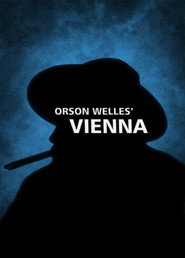
Vienna
1968 · 8m · UK
Orson Welles talks fantasy and magic in this short Vienna travelogue.
TMDB3.6
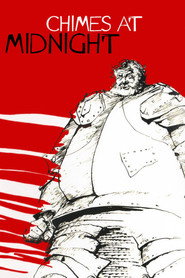
Chimes at Midnight
1965 · 1h 55m · ES
Henry IV usurps the English throne, sets in motion the factious War of the Roses and now faces a rebellion led by Northumberland scion Hotspur. Henry's heir, Prince Hal, is a ne'er-do-well carouser who drinks and causes mischief with his low-class friends, especially his rotund father figure, John Falstaff. To redeem his title, Hal may have to choose between allegiance to his real father and loyalty to his friend.
TMDB3.7
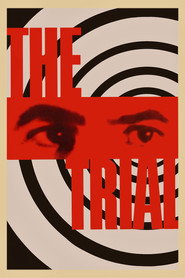
The Trial
1962 · 1h 59m · FR
Arrested for an unnamed crime, Josef K. is trapped in a surreal bureaucratic maze where justice is unknowable and guilt is assumed.
TMDB3.0
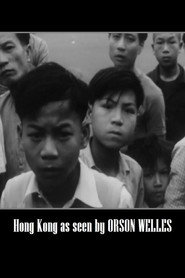
Five Columns on the Front Page: Hong Kong as seen by Orson Welles
1960 · 8m
Filmed in 1960 during a break in the production of "Ferry to Hong Kong," this short documentary records Orson Welles’s three-week journey through colonial Hong Kong and Macau. The film documents the refugee crisis and extreme social inequality of the period, contrasting overcrowded rooftops, sampans, hillside settlements, and street life with the city’s visible wealth and colonial luxury. Structured as a reportage essay, the film presents a stark observational portrait of displacement, poverty, and privilege within a divided urban landscape.
TMDB3.1
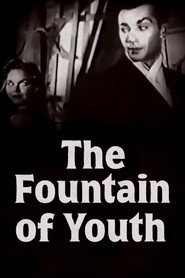
The Fountain of Youth
1958 · 27m · US
A darkly comic fable about vanity and desire, "The Fountain of Youth" follows a newly married couple whose relationship is destabilized by the arrival of a potion that promises centuries of youth and beauty—but in a quantity sufficient for only one person. As temptation and resentment grow, the gift becomes a catalyst for moral and emotional collapse. Written, directed, and narrated by Orson Welles and based on John Collier’s short story “Youth from Vienna,” the film uses stylized narration and experimental visual techniques to construct a compact essay on human vanity. (Note: Originally produced in 1956 as a television pilot and broadcast once in 1958 as part of NBC’s Colgate Theatre anthology series (S1E5); it later achieved independent archival and cultural status, including a 1958 Peabody Award.)
TMDB3.5
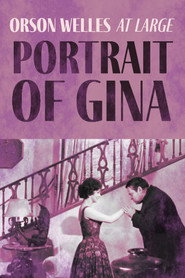
Orson Welles at Large: Portrait of Gina
1958 · 26m · US
An unbroadcast 1958 essay-film by Orson Welles, blending documentary, personal reflection, and cultural portraiture in a subjective study of Italy and actress Gina Lollobrigida.
TMDB3.9
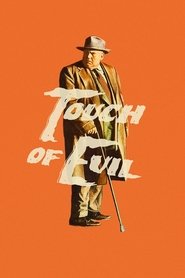
Touch of Evil
1958 · 1h 51m · US
A border-town bombing draws Mexican investigator Miguel Vargas into a corruption-ridden police investigation led by crooked captain Hank Quinlan, setting off a deadly struggle over power, justice, and truth.
Orson Welles and People: Camille, the Naked Lady and the Musketeers
TMDB3.5
Orson Welles and People: Camille, the Naked Lady and the Musketeers
1956 · 27m · US
A lost 1956 television pilot created by Orson Welles for a proposed documentary series. The filmed episode, “Camille, the Naked Lady and the Musketeers,” was a portrait of Alexandre Dumas constructed from narration, still images, and drawings. Shot in a single day and never broadcast, the pilot failed to secure a series commission, and the sole known copy is believed lost.
The Land of the Basques
1955 · 41m
TMDB3.4
Mr. Arkadin
1955 · 1h 47m · FR
Claiming that he doesn't know his own past, a rich man enlists an ex-con with an odd bit of detective work. Gregory Arkadin says he can't remember anything before the late 1920s, and convict Guy Van Stratten is happy to take the job of exploring his new acquaintance's life story. Guy's research turns up stunning details about his employer's past, and as his work seems linked to untimely deaths, the mystery surrounding Mr. Arkadin deepens.
TMDB3.5
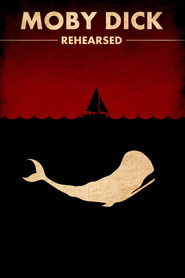
Moby Dick—Rehearsed
1955 · 1h 35m · UK
A meta-theatrical adaptation of Moby-Dick in which a rehearsal evolves into a full performance, as actors are absorbed into the roles of Ishmael, Starbuck, and Ahab in a stripped-down, imagination-driven staging. Filmed by Orson Welles in 1955, the footage remains unreleased and is considered lost.
TMDB3.7
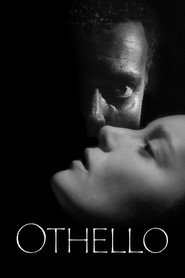
Othello
1951 · 1h 33m · IT
Manipulated by his jealous ensign Iago, the Moorish general Othello is driven to believe that his new wife Desdemona is unfaithful, setting in motion a chain of deception, jealousy, and violence that leads to tragedy.
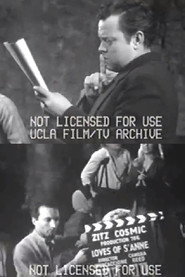
The Miracle of St. Anne
1950 · 1m
Series of rushes about cripples appearing in a Bible epic who are cured by a starlet playing Saint Anne.
TMDB3.6
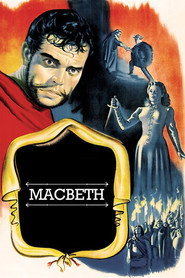
Macbeth
1948 · 1h 47m · US
Macbeth, the Thane of Glamis, receives a prophecy from a trio of witches that one day he will become King of Scotland. Consumed by ambition and spurred to action by his wife, Macbeth commits a treasonous act and takes the throne for himself.
TMDB3.7
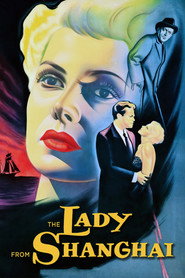
The Lady from Shanghai
1947 · 1h 27m · US
A romantic drifter gets caught between a corrupt tycoon and his voluptuous wife.
TMDB3.6
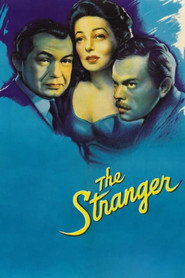
The Stranger
1946 · 1h 35m · US
An investigator from the War Crimes Commission travels to Connecticut to find an infamous Nazi, who may be hiding out in a small town in the guise of a distinguished professor engaged to the Supreme Court Justice’s daughter.
It's All True
It's All True
1943 · US
An unfinished omnibus film project by Orson Welles exploring Latin American life through documentary and dramatized non-fiction.
TMDB3.7
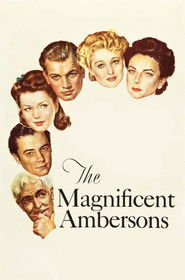
The Magnificent Ambersons
1942 · 1h 28m · US
The spoiled young heir to the decaying Amberson fortune comes between his widowed mother and the man she has always loved.
TMDB4.0
FF3.0
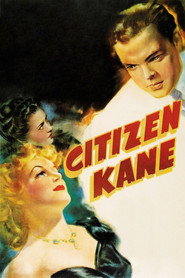
Citizen Kane
1941 · 1h 59m · US
Newspaper magnate Charles Foster Kane is taken from his mother as a boy and made the ward of a rich industrialist. As a result, every well-meaning, tyrannical or self-destructive move he makes for the rest of his life appears in some way to be a reaction to that deeply wounding event.
The Green Goddess
The Green Goddess
1939 · 20m · US
In 1939, Orson Welles staged a version of the play "The Green Goddess" in New York, which was preceded by a short film prelude. This was two years before the release of his debut feature film, "Citizen Kane". The footage is now believed lost.
TMDB2.7
The Hearts of Age
1934 · 8m · US
A surreal silent short composed of symbolic imagery and allegorical tableaux centered on themes of death and mortality.
TMDB2.4
Twelfth Night
1933 · 9m · US
The earliest surviving film of Orson Welles—a vignette of his and Roger Hill's production of "Twelfth Night" at the Todd School for Boys.