1990s Mexican TV Shows
The 40 most popular 1990s mexican TV shows, ranked. Click any show for ratings, reviews, trailers, and where to watch.

TMDB3.5
Marimar
1994 · MX
Story of love between Marimar and Sergio. Sergio is from a wealthy family, and Marimar lives with her poor grandparents in a hut in front of the ocean.

TMDB3.7
María la del Barrio
1995 · MX
A brave, poor young girl is welcomed into a rich family and develops a romance with their misogynist youngest son, driving a woman already in love with him to go to great lengths to destroy their relationship.

TMDB4.0
Agujetas de color de rosa
1994 · MX
Agujetas de color de rosa is a Mexican youth telenovela produced by Luis de Llano Macedo for Televisa and originally broadcast on Canal de las Estrellas from April 4, 1994, to May 26, 1995. Created by Susan Crowley, adapted by Sergio Schmucler, and with literary supervision by Gabriela Ortigoza, the telenovela stars Angélica María, Alberto Vázquez, Carlos Bracho, Natalia Esperón, Flavio César, and Alexis Ayala. The story follows Elisa Morán, a widow who is left in financial ruin after the death of her wealthy husband. As she struggles to rebuild her life and raise her three children, her daughter Paola falls in love with Martín, a talented young singer. Together, they face family conflicts, jealousy, betrayal, and the challenges of pursuing their dreams while discovering the true meaning of love, friendship, and perseverance.

TMDB4.1
Alguna Vez Tendremos Alas
1997 · MX
No overview available
TMDB3.4
Tres Mujeres
1999 · MX
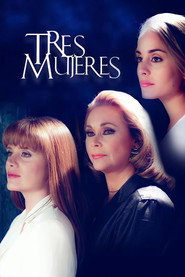
Tres Mujeres is a Mexican telenovela produced by Roberto Hernández Vázquez for Televisa and originally broadcast on Canal de las Estrellas from March 22, 1999, to April 14, 2000. Created by Martha Carrillo and Cristina García, with adaptation by Ximena Suárez, the telenovela stars Erika Buenfil, Karyme Lozano, Norma Herrera, Alexis Ayala, Jorge Salinas, and Pedro Armendáriz Jr. Due to its enormous popularity, the series was extended to 280 episodes. The story follows three women from different generations whose lives become intertwined through love, family conflicts, and personal struggles. As Bárbara, Fátima, and Greta face betrayal, ambition, heartbreak, and unexpected challenges, they must find the strength to overcome adversity while searching for happiness, forgiveness, and true love.
TMDB3.5
Capricho
1993 · MX
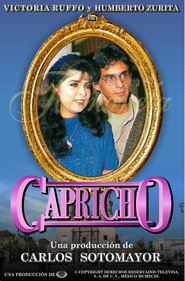
Story about a woman that is unhappily married and with two daughters. She constantly reprimands Cristina and baby Raquel. What the people around her don't know is that Raquel is not her husband's daughter as everyone believes. Raquel is Eugenia and León's daughter. She has always loved him, not her husband. That is the reason she's always angry at Cristina.

TMDB3.6
Maria Mercedes
1992 · MX
María Mercedes, a poor girl who sells lottery tickets, meets a rich man who hates his own family and sees in María Mercedes an opportunity to make their lives miserable.
Perla
TMDB1.6
Perla
1998 · MX
Perla is a Mexican telenovela produced by TV Azteca and it starred Silvia Navarro and Leonardo Garcia as protagonists.
TMDB3.6
Esmeralda
1996 · MX
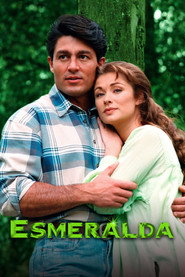
Esmeralda is a telenovela that was released by Televisa in 1997. It is a remake of a 1970 Venezuelan telenovela of that same name, and was itself remade in Brazil in 2004. Another version is Topacio from Venezuela in 1984. One of the most famous telenovela all the time.
TMDB3.1
Acapulco, cuerpo y alma
1995 · MX
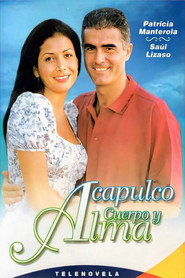
Marcelo envy and hate David and gradually plan to snatch the gun around his brother, Marcelo called Zihuatanejo Lorena, a seller of fish courting until it falls in love with him. Marcelo says his name is David Montalvo and is a renowned entrepreneur.

TMDB2.8
Conversando con Cristina Pacheco
1997 · MX
No overview available

TMDB3.5
Rosalinda
1999 · MX
Having to serve a sentence for a murder she did not commit but took the blame for, a woman gives her baby to her sister to be raised without knowing the truth. 20 years later she is freed and try to be once again part of her life. But things get complicated when the daugther, Rosalinda, and Fernando, the son of the man that was killed, become close.

TMDB3.8
Nothing Personal
1996 · MX
Police chief Fernándo Gomez Miranda kills his friend, the well-respected lawyer and likely candidate for Attorney General, Raúl de Los Reyes and his youngest daughter of only thirteen in a vehicle ambush. Gomez' son, Luis Mario – a sad-eyed broadcast journalist of passionate conviction – arrives on the scene soon after with his camera and discovers a wounded survivor in the car; Camila, the eldest daughter of de Los Reyes. Luis rushes her to the hospital, saving her life and thereby creating a bond between them that he cannot escape. Luis' half-brother, police detective Alfonso Carbajal, is assigned to the case. An old schoolmate of Camila's, Alfonso has long been in love with her and conflicts arise when all evidence points to Camila being involved in the drug trade. The two brothers find themselves caught between their professional duty that would require them to expose Camila and their desire to protect her.

TMDB3.8
Gotita de Amor
1998 · MX
Isabel is abandoned at the door of an orphanage a few days after birth. There she grows between the jokes of the other girls and the mistreatment of the harsh director called "Justa." One day her classmates show her a false birth certificate where it says that her father's name is Jesús García, that he is alive and resides in Mexico City, so she, with the hope of having a family, escapes from the orphanage towards Mexico City to look for her supposed father.

TMDB2.9
Alondra
1995 · MX
Alondra is a Mexican telenovela shown in 1995, written by Yolanda Vargas Dulché and produced by Carla Estrada, starring with Ana Colchero and the late Beatriz Sheridan. This telenovela contains 78 episodes.

TMDB3.3
La Chacala
1997 · MX
Javier takes Delia, his pregnant wife, to his ranch in a remote village. Although she's surrounded with love and comfort, Delia has an uneasy feeling. One day, Javier goes out hunting and kills a deer, which to his horror turns out to be a man. Javier's servants toss the corpse over a canyon and tell him to forget the incident, but the dead man's ghost seeks out his mother, the local witch, and begs her to avenge his murder. The witch turns up at Javier´s ranch, and under a mysterious and unexpected shower of thunder and lightning, curses the family. Javier's wife shall bear twin daughters, one of which shall be a fearsome demoness. A day later, Delia goes into labor and gives birth to a healthy baby girl. Everybody feels calmer after the birth, yet a couple of hours later, Delia gets labor pains again. This time she's ripped apart by another baby girl. Delia bleeds to death, yet because the two girls look identical, both healthy and beautiful, it´s hard to know which one killed her mother. Several years later, the identical twins have very different personalities. Gilda is an independent doctor and a city dweller. Her twin Liliana is a frail invalid who resides in the ranch. However, one of them harbors inside the dreadful Chacala, which will soon materialize to wreak havoc among those around her.

TMDB3.7
Soñadoras
1998 · MX
Soñadoras is a Mexican telenovela. It was produced by and broadcast on Televisa in 1998, and shown in 1999 on Univision.

TMDB3.3
En carne propia
1990 · MX
The year is 1972: Magdalena Dumont and Octávio Muriel are celebrating the birthday of their daughter, little Estefanía, at a party in the family mansion. However, this party is merely a backdrop and an opportunity to commit a crime.
TMDB3.8
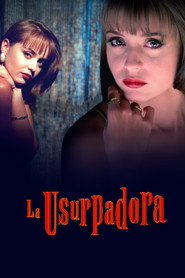
Deceptions
1998 · MX
The show's premise revolves around a pair of twin sisters who were separated when they were young, and as adults the younger sister is forced to act as a "replacement" for her wealthy twin who wants to temporarily leave her husband and his family to enjoy a life of luxury with multiple lovers.

TMDB3.6
María Isabel
1997 · MX
Native American girl Maria Isabel makes friends with Graciela, a rich white girl, despite Graciela's father's opposition; their friendship lasts into their adulthood.
TMDB4.0
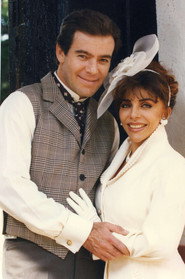
Pueblo chico, infierno grande
1997 · MX
Pueblo chico, infierno grande is a Mexican historical telenovela produced by José Alberto Castro for Televisa and originally broadcast on Canal de las Estrellas from January 6 to August 1, 1997. Created by Javier Ruán and adapted by Javier Ruán, Mario Hernández, and Sergio Schmucler, the telenovela is based on a true story about Leonarda Ruán. It stars Verónica Castro, Juan Soler, and Guillermo Capetillo. The story is set in the late 19th century and follows Leonarda Ruán, a wealthy widow from the town of Nahuatzen who falls in love with Genaro Onchi, a young man from a humble background. Their relationship faces strong opposition from society, family conflicts, jealousy, and the return of people from Leonarda's past who try to separate them. As secrets and rivalries emerge, Leonarda and Genaro fight to protect their love against the judgment and traditions of their small town.

TMDB3.5
Hurricane
1997 · MX
Huracán is a Mexican telenovela shown in Mexico from October 13, 1997 to March 27, 1998, starring with the late Jorge Russek, Fernando Balzaretti, and Eduardo Palomo.

TMDB4.0
Amor de nadie
1990 · MX
Amor de nadie is a Mexican telenovela produced by Carla Estrada for Televisa and originally broadcast on Canal de las Estrellas from September 10, 1990, to June 14, 1991. Created by Eric Vonn, with literary editing by Marcia del Río, the telenovela stars Lucía Méndez, Saúl Lisazo, Fernando Allende, and Bertín Osborne. It was Lucía Méndez's final telenovela as a leading actress for Televisa during this period. The story follows Sofía Hernández, a young woman from a humble mining town who dreams of leaving her difficult life behind. After suffering betrayal and hardship, she moves to Mexico City to pursue a career as a model. Along the way, she faces jealousy, ambition, family conflicts, and complicated relationships while searching for love and a better future.

TMDB3.5
El Privilegio de Amar
1998 · MX
Juan de la Cruz, a young seminarian, visits the home of his mother, Ana Joaquina—a religious zealot who has always imposed her will on her son and instilled in him a calling to serve God. Working in Ana Joaquina’s household is Luciana, an innocent, dreamy young woman who falls in love with Juan de la Cruz. One night, swept up in the passion of youth, they give in to their feelings with tenderness and innocence. Upon discovering this, Ana Joaquina throws Luciana out; by then, Luciana is already pregnant with Juan de la Cruz’s child. When the time comes to give birth, she leaves her daughter at a stranger's doorstep, hoping the child will be raised there, but the baby is instead taken to an orphanage. To survive, Luciana becomes involved with a series of unsavory men—including Pedro Trujillo, a brutal man who beats and abuses her.
TMDB3.5
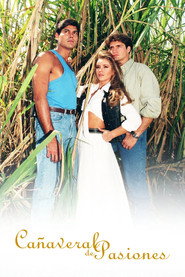
Cañaveral de Pasiones
1996 · MX
Cañaveral de Pasiones is a Mexican telenovela produced by Christian Bach and Humberto Zurita for Televisa and originally broadcast on Canal de las Estrellas from April 22 to September 3, 1996. It is based on the stories Una sombra entre los dos and Al pie del altar by Caridad Bravo Adams, adapted for television by María del Carmen Peña and José Cuauhtémoc Blanco. The story follows Julia Santos and Pablo Montero, two childhood friends whose lives are torn apart by a tragedy that sparks hatred between their families. Years later, Pablo returns to his hometown engaged to another woman, only to realize that he still loves Julia. As they struggle to rekindle their romance, they must confront family rivalries, dark secrets, jealousy, and betrayal that threaten to keep them apart forever.

TMDB2.5
Morelia
1995 · MX
Morelia is Mexican telenovela which starred Alpha Acosta, Arturo Peniche and Cecilia Bolocco. It was the first Mexican soap opera filmed in the city of Miami, it was produced and broadcast on Televisa in 1995–1996, Univision in 1996 and 2000–2001, Galavisión in 1998, and TeleFutura in 2003–2004. It is a remake of La Zulianita with Lupita Ferrer and José Bardina.
TMDB4.0
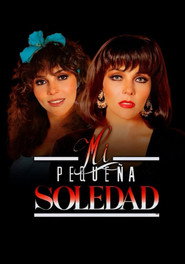
Mi pequeña Soledad
1990 · MX
Mi pequeña Soledad is a Mexican telenovela produced by Verónica Castro for Televisa and originally broadcast on Canal de las Estrellas from May 14 to December 21, 1990. Created by Jorge Lozano Soriano and adapted by Marissa Garrido and René Muñoz, the telenovela stars Verónica Castro, Omar Fierro, and Rafael Rojas. Castro portrays a double role as mother and daughter. The story follows Isadora, a young woman whose life is marked by tragedy after being separated from her daughter Soledad due to the actions of cruel and ambitious people. Years later, their paths cross again, unaware of their true relationship. Together, they must confront family secrets, betrayal, and the painful events that separated them while searching for love and happiness.

TMDB4.9
Yo compro esa mujer
1990 · MX
In the early 20th century, the Montes de Oca family—comprising two sisters and a cousin—finds itself entangled in an intense love triangle. Matilde is in love with her cousin Rodrigo, who loves the other sister, Branca Flor; she, in turn, loves a humble fisherman. Upon discovering this, Rodrigo accuses the fisherman of theft, leading to his arrest. The lovestruck cousin’s malice knows no bounds; learning that Branca Flor is carrying the fisherman's child, he waits for the baby to be born so he can make it disappear.

TMDB3.6
Two Women, One Road
1993 · MX
Dos mujeres, un camino is a Mexican telenovela, produced by Televisa, which originally aired from August 2, 1993 to July 1, 1994, on Canal de las Estrellas.
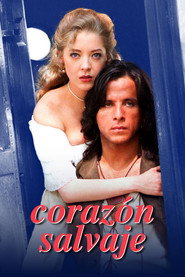
TMDB4.0
Corazón salvaje
1992 · MX
A telenovela that dramatizes the romances and rivalries between two brothers and two sisters in Mexico between the years 1885 and 1900.
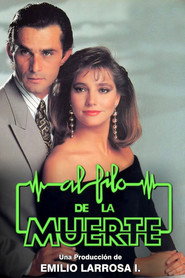
TMDB3.4
Al Filo de la Muerte
1991 · MX
Al filo de la muerte is a Mexican telenovela produced by Emilio Larrosa for Televisa and originally broadcast on Canal de las Estrellas from June 17, 1991, to February 21, 1992. Created by Fernanda Villeli and Marcia Yance, the telenovela stars Humberto Zurita and Gabriela Rivero. The story follows Tracy López, a young nurse living in Los Angeles whose life is turned upside down after she witnesses her boyfriend commit a murder. Placed in the Witness Protection Program under the new identity of Mariela Foret, she flees to Mexico City, where she begins working at a prestigious hospital. There she meets cardiologist Francisco Riquer, and despite their difficult first encounters, they fall in love while facing danger, revenge, and the lingering threat of Tracy's criminal past.
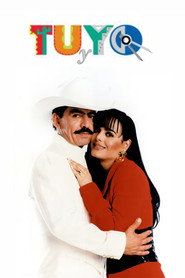
TMDB3.6
Tú y yo
1996 · MX
Tú y yo is a Mexican telenovela created and produced by Emilio Larrosa for Televisa and originally broadcast on Canal de las Estrellas from September 4, 1996, to March 20, 1997. Written by Alejandro Pohlenz, with story development by Verónica Suárez, the telenovela stars Maribel Guardia and Joan Sebastian. The story follows Estela Díaz-Infante and Tomás Santillana, whose romance blossoms despite the many conflicts surrounding the wealthy Santillana family. As they struggle to build a life together, they face jealousy, betrayal, family rivalries, and the schemes of those determined to keep them apart, testing the strength of their love and loyalty.

TMDB3.5
La fuerza del amor
1990 · MX
La fuerza del amor is a Mexican telenovela produced by Gonzalo Martínez Ortega for Televisa and originally broadcast on Canal de las Estrellas from June 4, 1990, to January 4, 1991. The story follows three young medical students who arrive in a remote town in Pachuca to complete their professional training. There, they face the influence of a local healer who has manipulated the community through false beliefs. As they try to gain the trust of the residents, they become involved in conflicts, love, and the struggle between knowledge and superstition.

TMDB3.5
Alma Rebelde
1999 · MX
Alma Rebelde is a 1999 Mexican telenovela, starring Lisette Morelos, Eduardo Verástegui and the late Edgar Ponce. It was produced by Televisa. This telenovela contained 90 episodes.

TMDB3.4
Vivo Por Elena
1998 · MX
Vivo Por Elena is a Mexican telenovela starring Victoria Ruffo and Saul Lisazo with the antagonic roles of Ana Patricia Rojo and Sebastian Ligarde. The telenovela aired on Univision in 1998. The theme song for the telenovela was Vivo Por Ella, sung by Andrea Bocelli with a duet by Marta Sanchez. The telenovela has been repeated several times on different channels since its original airing.

TMDB4.1
Cero en conducta
1999 · MX
Jorgito is a rebellious and insolent student who doesn't mince words when it comes to making fun of his teachers. Maestra Canuta and Director Rigoberto Patiño are the butt of all his jokes and they do not hesitate to give him severe punishments when they realize that Jorgito's sharp tongue is attacking them. This comedy program shows a group of irreverent students who, through their jokes, make fun of the current political and social situation in Mexico. Nobody is saved from the ridicule and the occurrences of these kids who, behind their harmless appearance, hide sharp criticism and double meaning jokes.
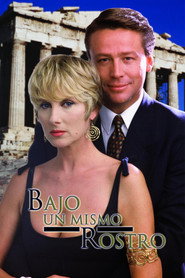
TMDB2.8
Bajo un Mismo Rostro
1995 · MX
After the murder of her father and brother, Irene Saldivar travels to Greece. There she meets and falls in love with entrepreneur Alexis Theodorakis. Carlos is the administrator of Irene's fortune and cooperates with Alejandro in a rotten and corrupt business where he marries rich women, kills them, and obtains their fortune. When Carlos finds out about Irene's marriage to Alexis, he formulates a plan to kill Alexis and obtain his fortune. During Irene and Alexis' honeymoon, Carlos' plan succeeds when the boat Alexis travels in explodes. A desperate and pregnant Irene returns to Mexico, where she falls in love with Dr. Diego Covarrubias. However, Irene is forced to leave him for the sake of her friend Carolina, since Carolina loves him and has cancer. Since Alejandro isn't able to win Irene's love, Alejandro gets in her life and forces her to marry him or risk losing her son - all of this as part of another plan Carlos formulated so he and Alejandro plot Irene's death in another fatal catastrophe.

TMDB3.7
Mirada de Mujer
1997 · MX
Mirada de mujer is a Mexican telenovela, which was produced by and broadcast on TV Azteca in 1997, based in the Colombian telenovela of 1994 " Señora Isabel". It is considered one of the best Telenovelas in the history of the television industry in Mexico. It came a year after TV Azteca's first telenovela, Nada personal and was the first telenovela in that TV station for its five mayor stars, who had been working for the rival station, Televisa, prior to this production. In 2003 the sequel for this telenovela Mirada de mujer: El Regreso was produced. This telenovela can be dated so far as the only TV Azteca telenovela that got the TVyNovelas Award as Best Telenovela of the Year in a shocking moment, making Televisa know to the audience the respect that got over his competitor product as long as the TVyNovelas Awards are only given to Televisa programs. Aside from enjoying wide viewership in Latin America, it was also broadcast in countries like Afghanistan and Israel and Eastern Europe. In India, this was shown by Sahara TV, dubbed in Hindi, under the title of Maria.

TMDB3.5
Mi Pequeña Traviesa
1997 · MX
Mi Pequeña Traviesa is a Mexican youth and family telenovela produced and directed by Pedro Damián for Televisa and originally broadcast on Canal de las Estrellas from December 8, 1997, to April 24, 1998. It is an adaptation of the Argentine telenovela Me llaman Gorrión, created by Abel Santa Cruz. The telenovela stars Michelle Vieth and Héctor Soberón. The story follows Julia González, a young woman whose dreams of pursuing a professional career are interrupted after her father is left paralyzed in an accident. To support her family, she disguises herself as a boy in order to find work. Along the way, she falls in love with Alberto Miranda, and together they must overcome social differences, family conflicts, and the many obstacles that stand in the way of their happiness.

TMDB4.0
Atrapada
1991 · MX
Atrapada is a Mexican telenovela produced by Ernesto Alonso for Televisa and originally broadcast on Canal de las Estrellas from August 19, 1991, to April 24, 1992. Created by Carmen Daniels and Liliana Abud, with literary editing by Tere Medina, the telenovela stars Christian Bach and Héctor Bonilla. The story begins when Antonio Montero, the wealthy president of the Montermex company, is found dead in what appears to be a suicide. Convinced that her father was actually murdered, his daughter Camila sets out to uncover the truth. As her investigation unfolds, she becomes entangled in a web of family secrets, betrayal, romance, and murder, where everyone around her becomes a suspect.
About 1990s Mexican TV Shows
The 1990s
1990s television was the last era of true mass audiences, when a network sitcom or a season finale could be a shared national event.
Mexican television
Mexican television's telenovela tradition is among the most widely exported formats in the world, and its streaming era has added darker crime and satire to the mix.
In this list
- Best reviewed
- Corazón salvaje (8.0)
- Most common genres
- Drama, Soap, Mystery
- Longest run
- 27 seasons
Common questions
- What are the best 1990s Mexican TV shows?
- By popularity across Flickfolio and TMDB, the top picks right now are Marimar, María la del Barrio, and Agujetas de color de rosa. The full ranked list of 40 sits above — open any show for ratings, reviews, and streaming availability.
- How is this list ranked?
- 1990s Mexican TV shows are ordered by overall popularity, which blends how often a title is viewed, searched, and logged. It updates as viewing habits shift, so the list reflects what people are actually watching rather than a fixed critical canon.
- Where can I watch these TV shows?
- Every show page lists current streaming, rental, and purchase options for your region, alongside community ratings and reviews from Flickfolio members.