1930s Brazilian Movies
The 40 most popular 1930s brazilian movies, ranked. Click any film for ratings, reviews, trailers, and where to watch.

TMDB2.5
Storm
1930 · 1h 5m · BR
The fluffy Lúcia falls in love with the sad and decadent besieger who welcomed her on a rainy night. Passionate, but keeping her flirtatious and city-like outfit, she starts cleaning and renovating the abandoned house where she has taken shelter and where she finds new love.
TMDB4.5
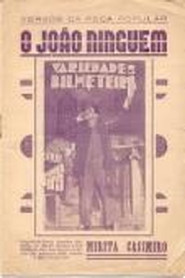
João Ninguém
1936 · 1h 6m · BR
João Ninguém is a humble composer who made the waltz "Sonhos Azuis" as a gift to his girlfriend on her birthday. To give it to her, he asked for help from a friend, but on the way, an accident happens and puts at risk not only the relationship, but also João's life and career.

TMDB3.0
Maridinho de Luxo
1938 · 1h 23m · BR
A pampered girl decides to marry in a different way: buying a husband.
TMDB5.0
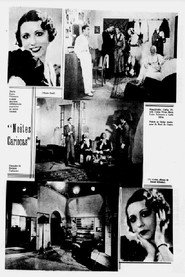
Noites Cariocas
1935 · AR
No overview available
TMDB4.0
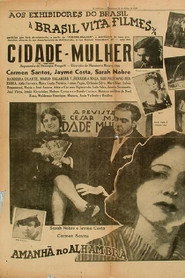
Cidade Mulher
1936 · 1h 20m · BR
A theater manager about to go bankrupt decides to accept help from his daughter and her boyfriend to save the family's finances, which she does with the sponsorship of a rich man.
TMDB4.0
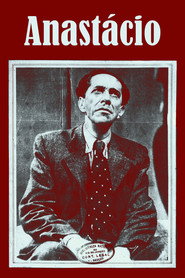
Anastácio
1939 · 1h 16m · BR
After his father's death, a prosperous banker, Fernando, takes over the bank with the support of his family and shareholders. But his actions lead to bankruptcy, and he faces the family's hardship. With his assets auctioned off, Fernando lives in a boarding house until he faces bankruptcy proceedings and is arrested.

TMDB2.5
Um Apólogo
1939 · 14m · BR
An adaptation of Machado de Assis' eponymous short story, preceded by a short telling of the author's life and works.
TMDB3.4
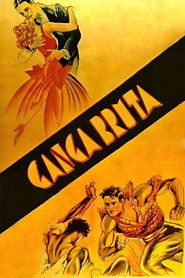
Rough Gang
1933 · 1h 18m · BR
A man kills his wife on their wedding night, after discovering she had been unfaithful. After being acquitted, he moves to the country, where he becomes part of a love triangle.

TMDB4.0
The King's Jester
1937 · 1h 35m · BR
A wealthy sugar mill owner, widowed and living with his only son, suffers from profound melancholy. To alleviate his suffering, he seeks entertainment in the form of any jerk willing to lend a hand. Among the many candidates his secretary presents to fill the "position", a certain "Penguin", who along with his sister "Picolé" lives on the favela hill under the protection of a kind Portuguese shopkeeper, completely pleases the "sovereign" of sugar. With "Penguin"'s entry into the court as the sugar king's "fool", great transformations take place in the home of the wealthy misanthrope.
TMDB5.0
Alma e Corpo de uma Raça
1938 · 1h 31m · BR
Luizinho is a young man passionate about Flamengo, fortunate enough to have his education paid for by the club, and plays in the team's lower divisions. A pupil of Rubens, the two compete for a spot on the professional team. Until Rubens introduces his friend to the woman he's in love with, Maria Helena. The problem is that she was Luizinho's childhood sweetheart, and the encounter rekindles their passion. A conflict begins between the two players that will be decided on the field.
TMDB5.0
Depravação
1932
Made in 1926, but only shown in 1932. It starred amateur actors, breaking box office records with consecutive showings for several weeks.
TMDB4.5
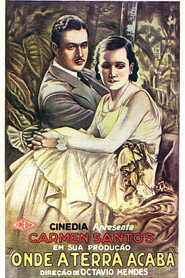
Onde a Terra Acaba
1933 · BR
A woman flees to an isolated island, expecting peace and inspiration to write a novel. Her arrival, however, threats the stability of the islanders' lives as it stirs conflict between two men.
TMDB5.0
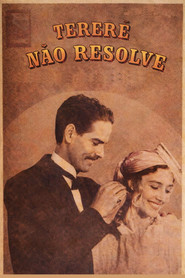
Tererê Não Resolve
1938 · BR
Three couples, two already living in Rio; and the third, with 'the one who hates carnival', coming to visit an aunt. One of the women bets that all husbands are unfaithful. They send invitations to their husbands to the carnival ball. They find a pretext to be able to attend. They, in turn, go in disguise, just like the maid. Hence the confusion at the ball, each one dating the other's wife.

TMDB4.5
Woman
1931 · 1h 10m · BR
Carmen, a poor and beautiful woman, lives in a shantytown in Rio de Janeiro. All men desire her, including her stepfather, but she only has eyes for her boyfriend, Milton. After being expelled from home, she finds out her lover is married. Unhappy with her life, she finds a place in a boarding house and tries to find a job, with no success. Tired and starving, she ends up passing out in the street, being helped by a passer-by, who leaves her at writer Flávio Martins's house, a man torn between the proposal of an arranged marriage, an old flame, and the new guest.

TMDB3.0
Victória Régia
1937 · 8m · BR
A short documentary about the Victoria Regia.
TMDB4.0
O Babão
1930 · 2h · BR
Zé Babão is a hillbilly who does not care about working, leads the good life of the interior and is in love with Conchita. One day, an Italian appears interested in all the banana trees of Zé Babão and, for this, decides to marry Conchita.

TMDB2.5
O Puraquê
1939 · 12m · BR
Between captured images, animations and scientific descriptions, the puraquê electric fish is presented through the eyes of Humberto Mauro and Carlos Chagas Filho.

TMDB4.5
Hello, Hello, Brazil!
1935 · 1h 18m · BR
A man is looking for a radio singer named "Dulcineia." For this, he goes through the biggest hassles and problems. The plot, in fact, is an excuse for the exhibition of the musical numbers of the greatest Brazilian Radio artists.

TMDB5.0
Messalina, a Imperatriz da Luxúria
1930 · BR
The surprising story of the scandalous Empress of Rome, Messalina.
TMDB4.5
Às Armas
1930 · BR
A country boy goes to São Paulo to enlist and leaves two girls in the countryside: one very simple and nice, who liked him, and another very pretty, who he liked.
TMDB3.6
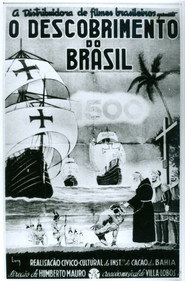
The Discovery of Brazil
1937 · 1h 2m · BR
O Descobrimento do Brasil (The Discovery of Brazil) is an impressive historical epic recreating Álvares Cabral’s voyage to the New World in 1500, with a score especially written by the renowned composer, Heitor Villa-Lobos. One of the earliest examples of Brazilian cinema, this film depicts the perilous journey of Pedro Álvares Cabral’s armada from Portugal to Brazil. Though somewhat rudimentary compared to other films of the period, The Discovery of Brazil distinguishes itself with its scenes of indigenous people and Portuguese explorers on the beach, and in the imaginative lighting on board the ship. But the real star is the beautiful cantata by Villa-Lobos that permeates the film.
TMDB4.0
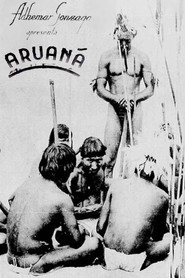
Aruanã
1938 · 1h 15m · BR
A german adventurer leads an expedition to the Serra dos Martírios, in search of gold.
TMDB3.5
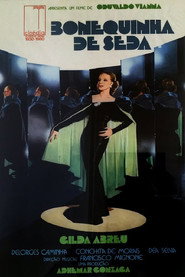
Bonequinha de Seda
1936 · 1h 55m · BR
A poor woman passes herself as singer that just arrives from Frances and becames a sensation on Rio de Janeiro's high society.
TMDB5.0
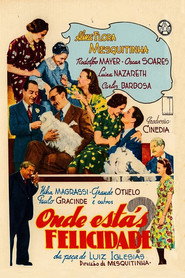
Onde Estás, Felicidade?
1939 · 1h 30m · BR
Badly advised by a high-class friend (who covets her husband) and by her scatterbrained father (always preoccupied with making cocktails), singer Noêmia forces her husband to abandon suburban life for the noisy 'big life' of Copacabana.
TMDB4.0
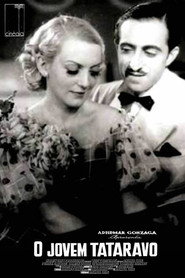
The Young Great-Great-Grandfather
1936 · 1h 17m · BR
In a séance, Menezes' great-great-grandfather is brought back to life in present day (1936), over a century after his death at age 26. A free-spirited womanizer, he starts causing all sorts of trouble for the wealthy, respectable family of his descendants.
TMDB3.8
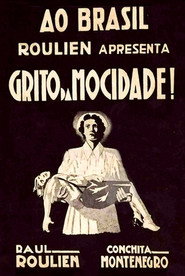
O Grito da Mocidade
1937 · 1h 30m · BR
The lives of five young medical interns in in the emergency ward of a hospital in Rio de Janeiro.

TMDB3.0
Alô Alô Carnaval
1936 · 1h 15m · BR
Two authors go look for a business to finance their dream musical.

TMDB3.5
Limite
1931 · 2h · BR
Adrift in the vast expanse of the ocean, a solitary boat carries three castaways—a man and two women. Stranded and devoid of any glimmer of rescue, they find solace in recounting the tales of their lives to one another. As they delve into their personal narratives, reminiscing about the circumstances that led them to this desolate predicament, they navigate through the depths of three distinct destinies. Bound by the confines of their shared space, every aspect of their existence becomes a boundary, underscoring their plight.
TMDB5.0
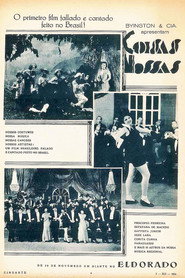
Our Things
1931 · BR
Comical late 1920s Brazilian daily life's situations, portrayed by two friends who decide to serenade a common girlfriend, a drunk barber and a bad haircut, and a man who is barred from playing his songs at the hotel where he was staying.

TMDB5.0
Family Football
1939 · 1h 16m · BR
Professor Leônidas Jau is an enemy of football, and in conferences and articles he throws all his hatred against the sport. Friendenreich, his son, however, loves the sport. Leonidas then has a falling out with his son, which may be saved.

TMDB3.5
Italian Wings Over the Skies of Brazil
1931 · 10m · BR
On an expedition through Latin America, Italian General Italo Balbo made the Atlantic crossing with his seaplane squadron, which left Boloma, entered Brazilian territory via Natal and now ended its journey in the capital Rio de Janeiro. Arrival of the fascist squadron at Enseada de Botafogo. People, many in boats, applaud the descent of the seaplanes. A group of officers searches the soldiers in profile. Italo Balbo, Ambassador Vittorio Cerrutti and Royal Consul Onorevole Mammalella watch the parade of troops. A group of officers with Col. Magdalena, "the intrepid hero of several aerial feats". At the Catete Palace, Balbo and Cerrutti are received by the President of the Provisional Government, Getúlio Vargas, and his ministers. The Italian delegation leaves the Catete Palace.

TMDB4.0
Alvorada de Glória
1931 · BR
At the Paulistano Club pool, Lygia tells Nilo that she liked the album "Lua Branca," recorded by the young man. He promises to visit her to perform the song in person. The visit marks the beginning of a romance between the two, which later becomes an engagement. However, Nilo is involved in the 1924 uprising in the barracks and, with the outbreak of the revolution, leaves for the front. The city of São Paulo shows the damage caused by the bombings. The rebels, wanting to avoid further sacrifices to the city, after days of fighting and victory, decide to abandon it.
Está Tudo Aí!
TMDB3.5
Está Tudo Aí!
1939 · BR
An elderly head of the family, unlike his family—wife, daughters, future son-in-law, and servants—horrifies Carnaval, forming a humorous contrast. But, in need of money, he finds himself forced to accept the demands of an old Luzitano, who will only lend him money if he joins his group and joins the revelry.
TMDB4.5
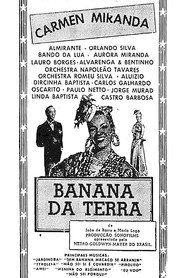
Banana-da-Terra
1939 · 1h 15m · BR
A man in charge of a publicity campaign for bananas decides to kidnap the Queen of 'Bananaland', a tropical island paradise, and take her to Rio, where she falls in love with a member of Carmen Miranda's backing ensemble, 'Bando da Lua'.

TMDB4.0
O Campeão de Foot-Ball
1931
Zezinho is a hillbilly soccer fan from the countryside. He's in love with a teacher and does everything he can to win her over, but nothing works. As a final plan, Zezinho pretends to be a great soccer champion.

TMDB3.5
The Mystery of the Black Domino
1931 · BR
"The Mystery of the Black Domino" was the first film directed in Brazil by a woman, the pioneer Cleo de Verberena. Marcos and Virgílio are medical students and share the same room. At the end of the first night of carnaval, Marcos finds the corpse of a woman, dressed as a black domino, inside the closet and accuses Virgílio of murder. Virgílio defends himself by saying that that was Cleo, wife of Commander Fernando Almeida, and that he found her in the corso asking for help, but Marcos questions Virgílio about the veracity of the story. Lost Film.
TMDB5.0
Meu Primeiro Amor
1930 · BR
Glorinha was a maid at a fashion house. One day, she met Gilberto, who immediately fell in love with her. However, his brother, Claudio, also fell in love with her.
TMDB4.0
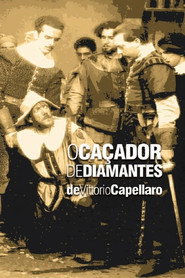
O Caçador de Diamantes
1934 · 1h 22m · BR
Brazil, late 17th century. An adventurer joins an expedition, but secretly he's out to find a treasure following a map left by his father.
TMDB3.5
Honor and Jealousy
1933 · BR
A Russian refugee comes to Brazil and marries a hard-working, honest man who loves her passionately. Suddenly, her husband inherits a vast fortune, and she finds herself rich, with beautiful jewelry and admirers. Until one day, her husband discovers that she's cheating on him and murders her.
TMDB4.0
O Destino das Rosas
1930 · BR
A young woman, the daughter of a farmhand, is in love with the farmer's son, a young student living in the capital who has no good intentions toward her. Carrapiche, a modest and crippled young man, is also in love with the girl, but he knows of the other's bad intentions.
About 1930s Brazilian Movies
The 1930s
The 1930s were the studio system at full power, with sound now fully integrated and the Production Code arriving mid-decade to sharply narrow what films could depict. It's the decade of the Universal monster cycle, screwball comedy, and the first Technicolor spectacles.
Brazilian cinema
Brazilian cinema's Cinema Novo movement of the 1960s tied filmmaking directly to social critique, a thread that runs through to the urban dramas that broke internationally in the 2000s.
In this list
- Most common genres
- Drama, Comedy, Music
Common questions
- What are the best 1930s Brazilian movies?
- By popularity across Flickfolio and TMDB, the top picks right now are Storm, João Ninguém, and Maridinho de Luxo. The full ranked list of 40 sits above — open any movie for ratings, reviews, and streaming availability.
- How is this list ranked?
- 1930s Brazilian movies are ordered by overall popularity, which blends how often a title is viewed, searched, and logged. It updates as viewing habits shift, so the list reflects what people are actually watching rather than a fixed critical canon.
- Where can I watch these movies?
- Every movie page lists current streaming, rental, and purchase options for your region, alongside community ratings and reviews from Flickfolio members.