1960s Japanese TV Shows
The 40 most popular 1960s japanese TV shows, ranked. Click any show for ratings, reviews, trailers, and where to watch.
40shows
1rated by members
Top ratedUltraseven5.0
TMDB3.5
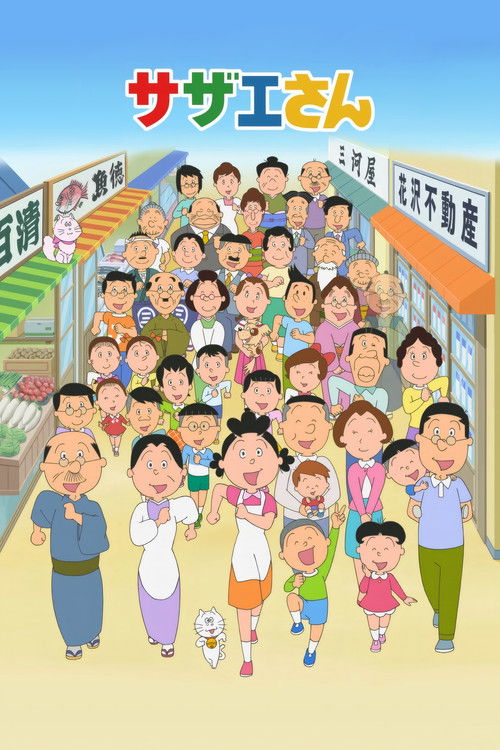
Sazae-san
1969
country: Japan
The adventures of Sazae Fuguta and her family and friends in their Tokyo suburb.

TMDB3.6
Astro Boy
1963
country: Japan
In the year 2000, Dr. Boyton creates a super-robot in his deceased son's image. He calls the robot Astro Boy. Astro Boy can swim oceans, leap over mountains, even fly into space on his own power. However, Astro Boy can't replace his son. Dr. Boyton becomes dissatisfied with the boy robot and disowns him. Astro Boy is befriended by Dr. Packadermus J. Elefun of the Institute of Science, who guides him through his adventures. Endowed with super strength, rocket-powered flight, a selfless heart and a kind demeanor, Astro Boy fights a never-ending crusade against the forces of evil!
TMDB4.2
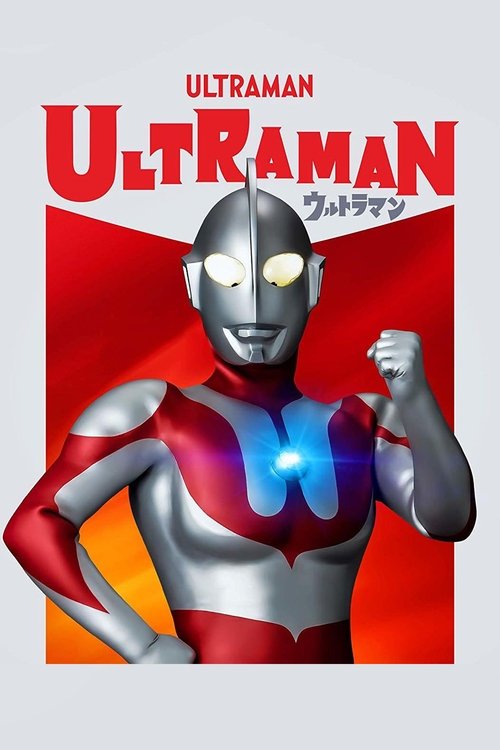
Ultraman
1966
country: Japan
Hayata is a member of the Science Patrol, an organization tasked with investigating bizarre anomalies. He is mortally wounded when accidently encountering an alien being from Land of Light, who grants Hayata new life as the two are merged into one. Now, whenever a threat arises that is too great for the Science Patrol to handle, Hayata activates the beta capsule and becomes the hero known as Ultraman.
TMDB4.0
FF5.0
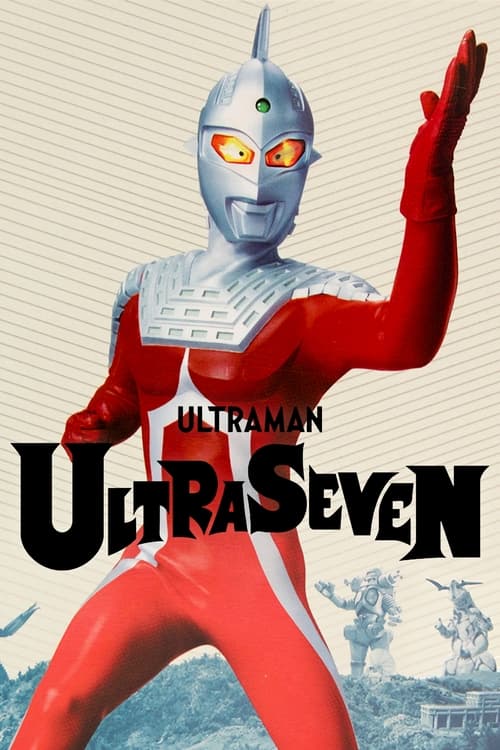
Ultraseven
1967
country: Japan
In the not-too-distant future, the Earth finds itself constantly under attack from extraterrestrial threats. The Terrestrial Defense Force establishes the Ultra Garrison, a team of six elite members who utilize high-tech vehicles and weaponry. Joining their fight is the mysterious Dan Moroboshi, secretly an alien from the Land of Light in Nebula M-78, who transforms into his true form in times of crisis, Ultraseven.
TMDB4.3
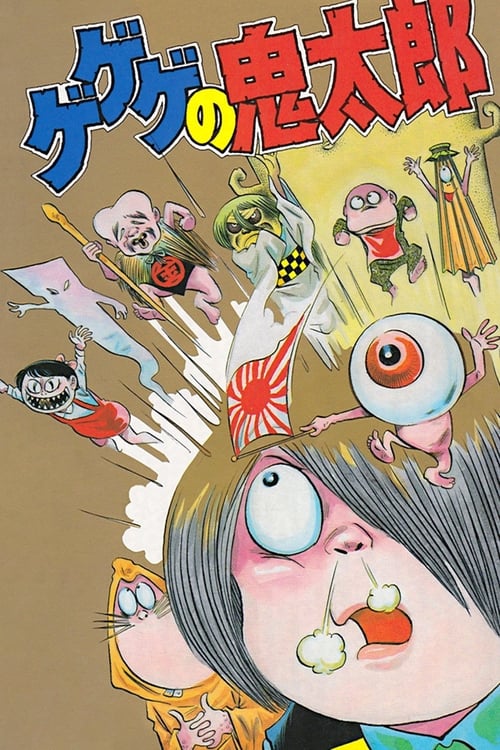
Cackling Kitarou
1968
country: Japan
Kitarou, a ghost, spends his afterlife helping humans in need of his skills. He thwarts the plans of evil spirits who live to torment humanity.
TMDB3.9
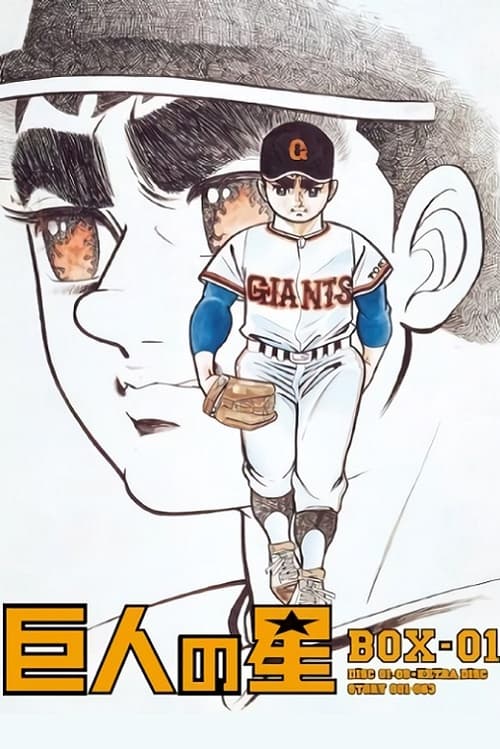
Star of the Giants
1968
country: Japan
In 1969, at the press conference of Nagashima Shigeo who was joining a professional baseball team, Yomiurhi Kyojin, a ball was thrown at him by a boy. He was Hoshi Hyuma, and a thrown ball meant a letter of challenge. His father, Hoshi Ittetsu, had trained Huma since he had been very young to achieve his dream to make him a professional baseball player.
TMDB4.5
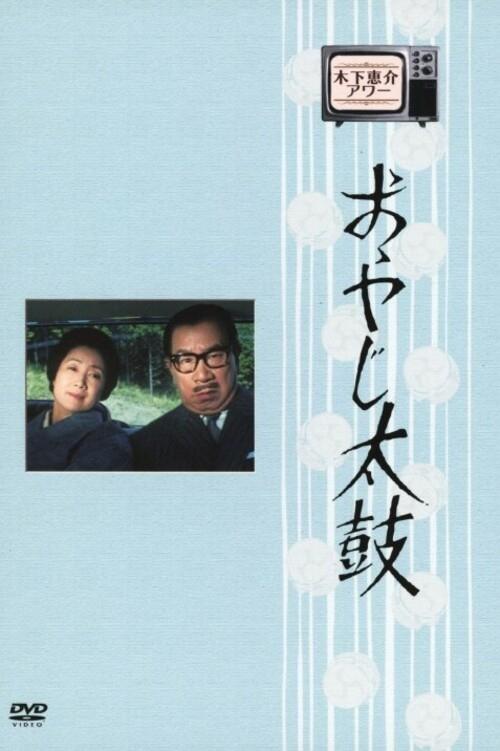
Oyaji Daiko
1968
country: Japan
The Tsuru family is a family of nine, headed by Kamejiro. Kamejiro is the president of a construction company that has made a fortune in its first generation, but he is a one-man family. His wife, Aiko, is a typical good wife and wise mother type. Kamejiro gets angry and thunders down every week, and the children are afraid of him, calling him "Oyaji Daiko", but he also takes advantage of this.

TMDB3.3
Tiger Mask
1969
country: Japan
A villainous masked wrestler becomes a hero for the sake of protecting the orphanage in which he was raised.
TMDB0.5
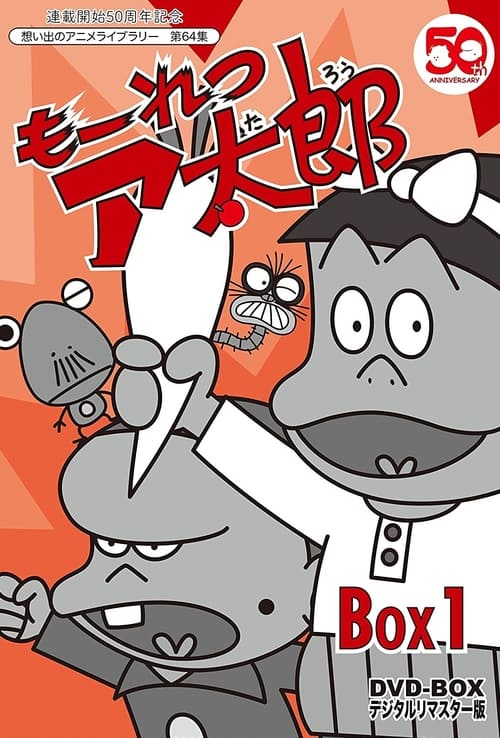
もーれつア太郎
1969
country: Japan
No overview available
TMDB3.6
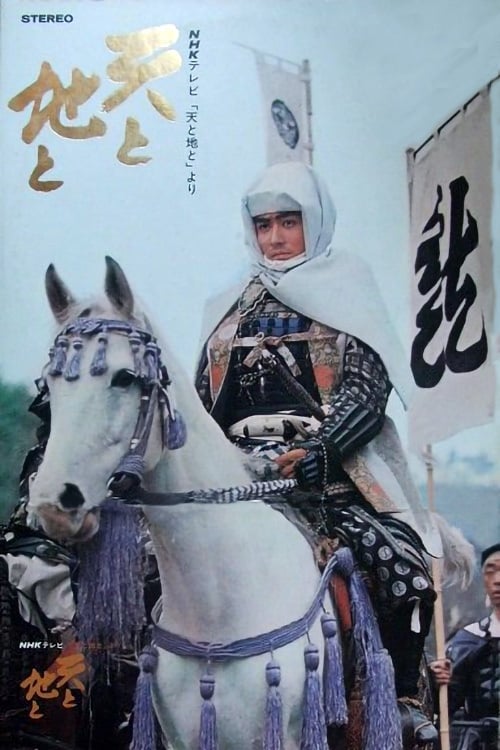
Heaven and Earth
1969
country: Japan
The story chronicles the life of Nagao Kagetora.
TMDB2.9
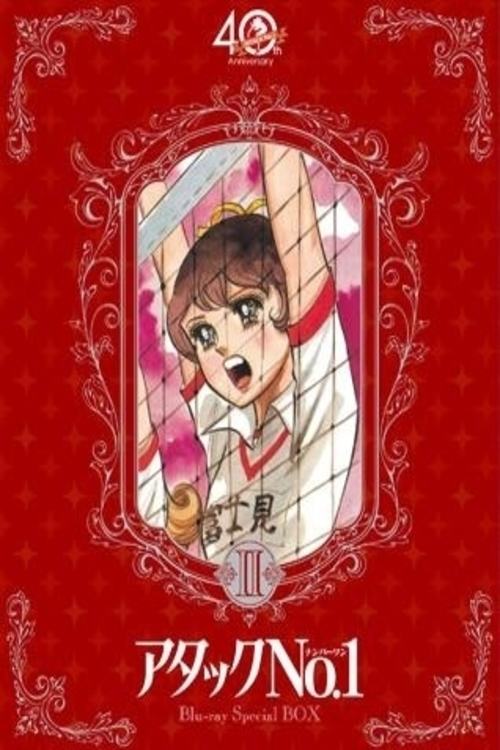
Attack Number One
1969
country: Japan
The story is about Kozue Ayuhara, a girl who transferred to Fujimi College and tried out for the school volleyball team. She develops a friendship with her teammate Midori Hayakawa, and her talents impress coach Hongō more and more each day. Though she showcases extraordinary volleyball skills, she makes enemies with Yoshimura, the star of the current team. Kozue discovers that being at the top would bring stress, incompatibilities and other dilemmas into her life. Her high expectations of becoming the best volleyball player in the school, Japan and eventually the world, set the tone for the drama to follow.

TMDB3.1
Kimba the White Lion
1965
country: Japan
The adventures of Leo, a young lion cub who becomes king of the jungle when his father, the previous king of the jungle is killed by a human hunter.
TMDB3.9
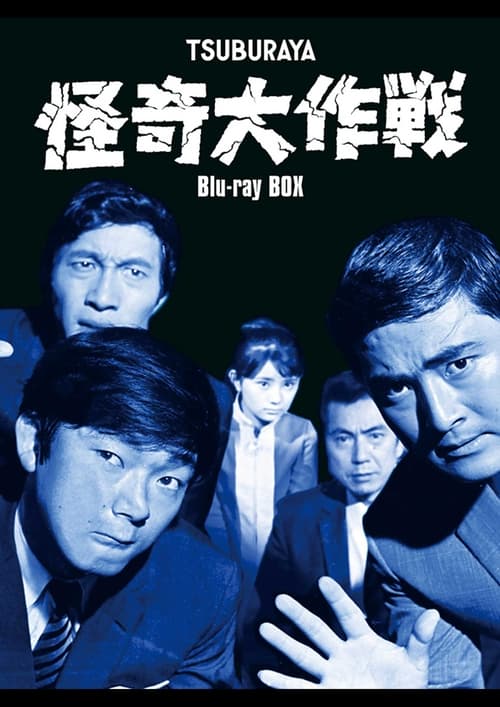
Operation: Mystery
1968
country: Japan
Advancements in science and the unchanging human psyche have given rise to new forms of terrifying crimes as the Science Research Institute (SRI) investigates various strange phenomena in Japan.
TMDB4.5
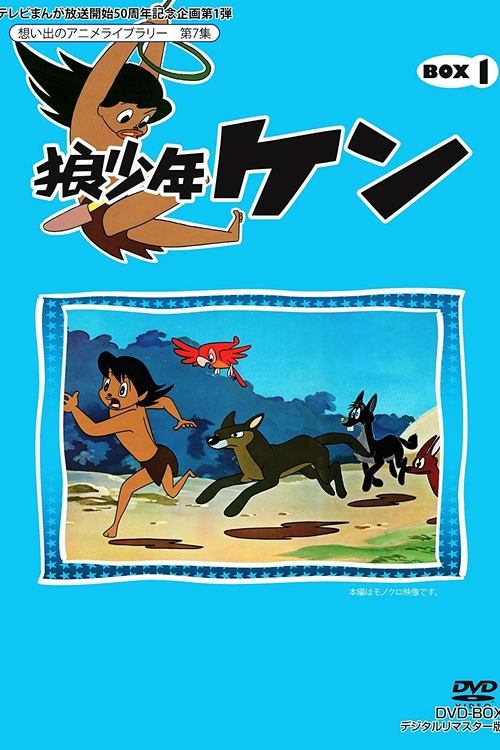
Wolf Boy Ken
1963
country: Japan
No overview available
TMDB3.3
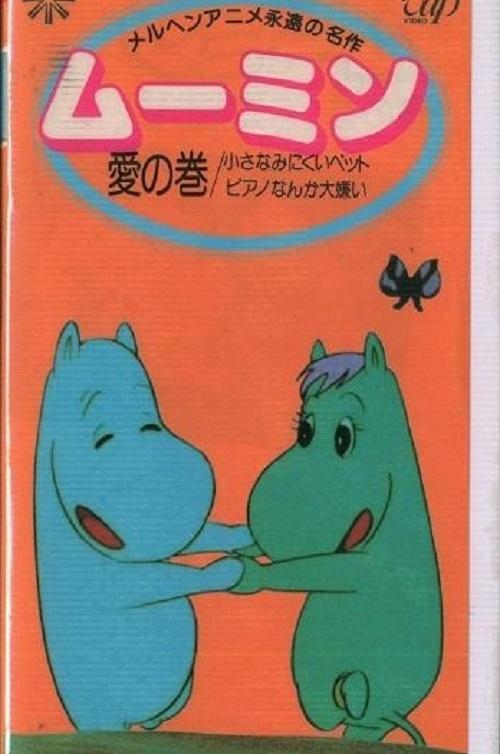
Moomin
1969
country: Japan
Moomin is a Japanese anime series broadcast on the Fuji Television Network between 1969 and 1970. It is loosely based on the Moomin books by the Finnish author Tove Jansson.
TMDB4.0
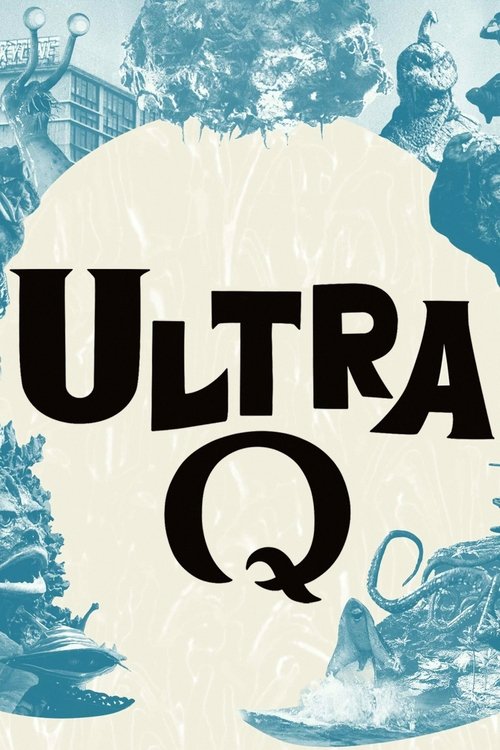
Ultra Q
1966
country: Japan
As supernatural events and monster attacks rock Japan, the military and government look to be overwhelmed. Three intrepid young investigators—two pilots and a reporter—take it upon themselves to study these unexplained phenomena in order to inform and protect the public.
TMDB3.7
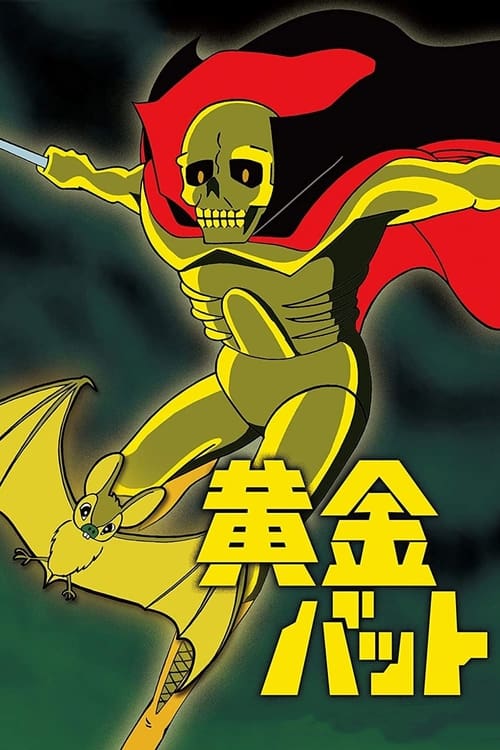
Golden Bat
1967
country: Japan
Professor Yamatone and his family visit present day Egypt, and discover an ancient tomb belonging to a god of justice and protector of the weak known as Ogon Bat. When the Professor is taken captive by Gorgo, agent of the evil Dr. Erich Nazō (ナゾー), his daughter Mari pleads for Ogon Bat to save her father. As she starts to cry, her tears fall in Ogon Bat's tomb and revive him. From then on, Mari calls on Ogon Bat to fight against evil.
TMDB3.8
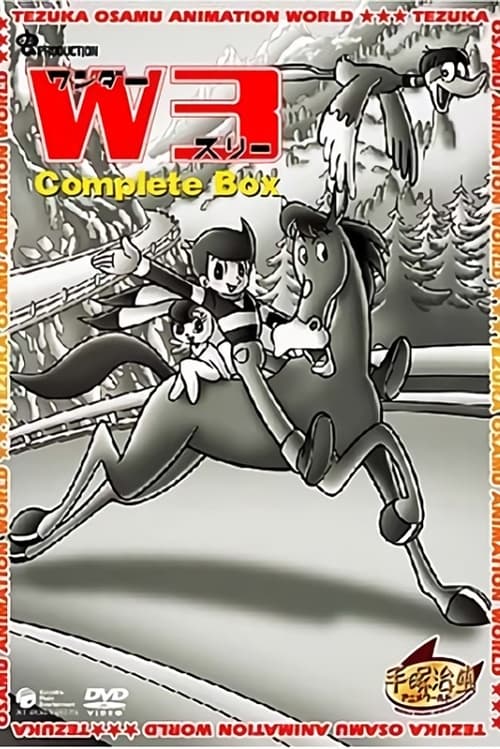
W3
1965
country: Japan
The Galactic Federation is concerned about the number of wars on the Planet Earth. It sends three agents to determine if the planet is a potential threat to the universe, and whether it should be destroyed. The instrument of destruction is a device resembling a large black ball with two antennae that is variously called an anti-proton bomb, a solar bomb, and a neutron bomb. The agents (Captain Bokko, Nokko, and Pukko) are originally humanoid in appearance, but upon arrival on Earth they take on the appearances of a rabbit (Bokko), a horse (Nokko), and a duck (Pukko) that they had captured as examples of Earth life forms. While on Earth they travel in a tire-shaped vehicle capable of enormous speeds called the Big Wheel, which can travel on both land and water (and, with modifications, through the air)
TMDB4.0
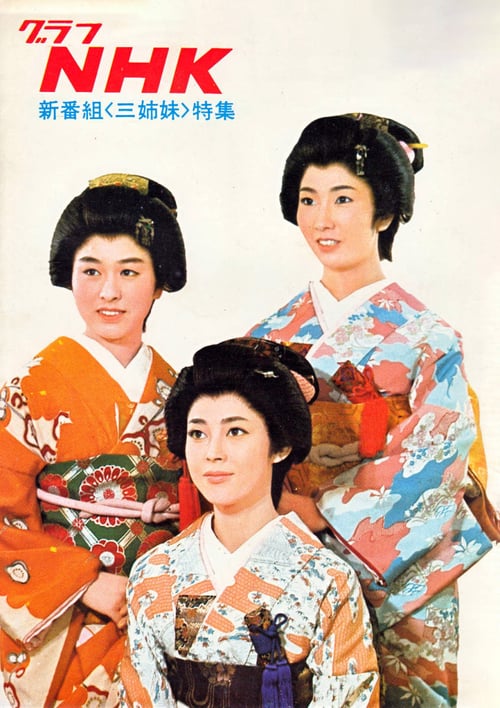
Three Sisters
1967
country: Japan
The Story is about three daughters of a "Hatamoto" during the end of the Edo period and the Meiji Restoration.
TMDB3.5
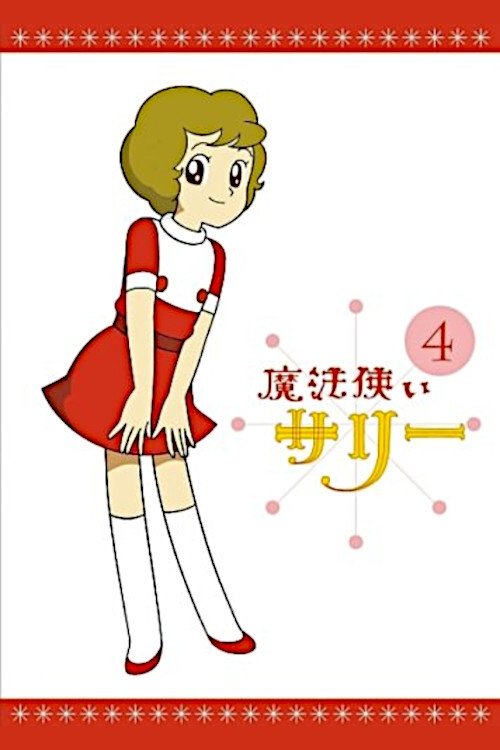
Sally the Witch
1966
country: Japan
Sally is the witch princess of the Magic Kingdom who longs to visit the mortal realm, presumably to make friends her own age. One day, by mistake, Sally teleports to the "mid world" (Earth), where she uses her magic to fend off a couple of burglars menacing two schoolgirls. Immediately befriended by her new acquaintances — tomboyish Yoshiko Hanamura (known affectionately as "Yotchan") and girly Sumire Kasugano — Sally decides to stay on Earth indefinitely, leading to mischief. As with Samantha Stevens in Bewitched, Sally tries to keep her supernatural abilities secret, assuming the role of a human child. In the final episode, Sally's grandma informs her she must return to the Magic Kingdom. Before leaving, Sally tries to tell her friends about her origins, but no one will believe her. Then her elementary school catches on fire, and Sally uses her magic to put it out. Her powers thus exposed, Sally's time to leave has finally come. She waves farewell to her friends, and returns to the Magic Kingdom. Being so popular in Japan, mostly the same way as classic Hanna-Barbera characters are in America, a second series was produced 20 years later. The second series continues a few years after the original ending, and finishes with the Original video animation Sally the Witch: Mother's Love is Eternal, in which, at the end, Sally finally becomes the ruler Queen of the Magic Kingdom, but worries about leaving her friends behind.
TMDB3.3
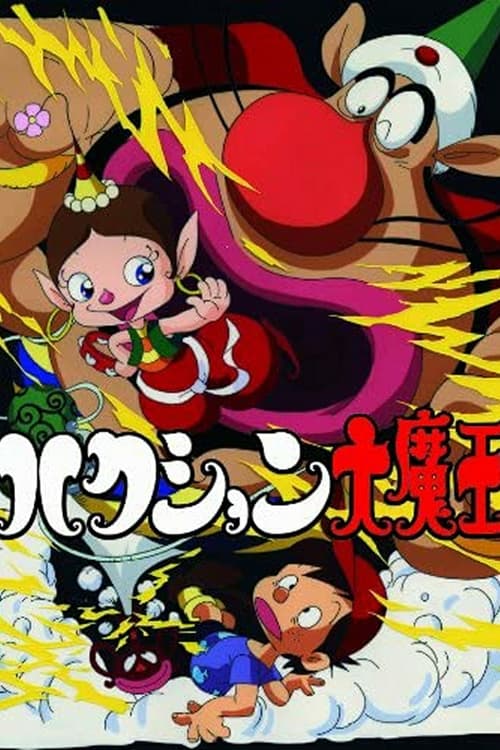
The Genie Family
1969
country: Japan
An old bottle has found its way into the household of a modern family, which consists of a boy named Kan and his parents. A genie, Hakushon, and his daughter, Akubi, reside inside it. When Kan finds the bottle, he discovers that a sneeze summons Hakushon and he must grant the wish of whoever sneezed, while a yawn summons Akubi and she must do the same for whoever yawned. Getting wishes granted by either genie may not be a good thing, for Hakushon messes them up due to his own extreme clumsiness, while the more capable Akubi likes to cause mischief by twisting their words and meanings so that something bad happens.
TMDB4.0
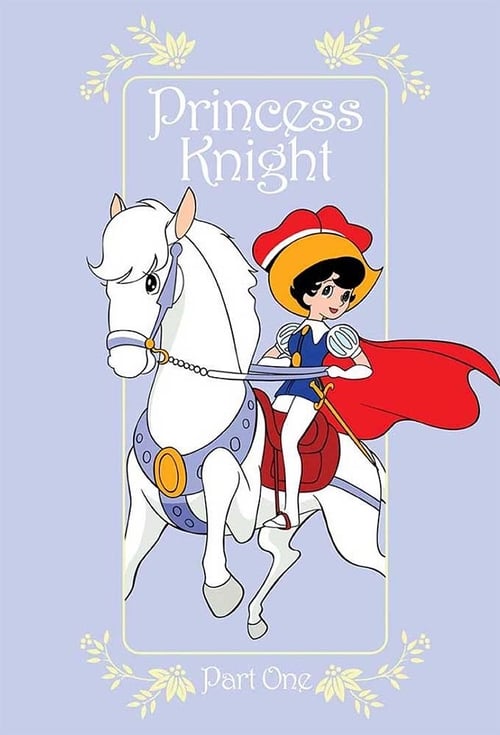
Princess Knight
1967
country: Japan
Princess Sapphire is a girl raised as a Prince. Through the mischief of an angel, the princess is born with both a girl's and a boy's heart. Since there is no boy successor in her kingdom, Sapphire is raised as a boy, but evil ministers try to reveal her secret. Unable to put up with the kind of vicious conduct prevailing in the kingdom, Sapphire disguises herself as "Princess Knight" and wields her sword of justice.
TMDB2.8
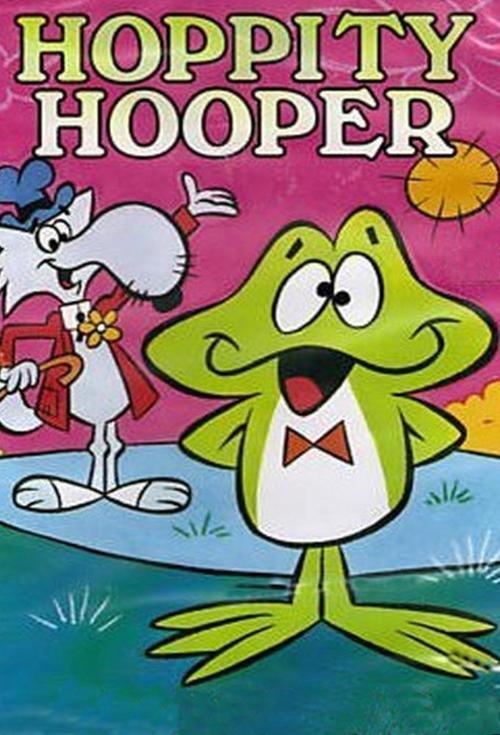
Hoppity Hooper
1962
country: Japan
Hoppity Hooper is a American animated television series produced by Jay Ward, and sponsored by General Mills, originally broadcast on ABC on September 12, 1962 and premiered in full on January 1. The series was produced in Hollywood by Jay Ward and Bill Scott, with animation done in Mexico City by Gamma Productions.
TMDB0.5
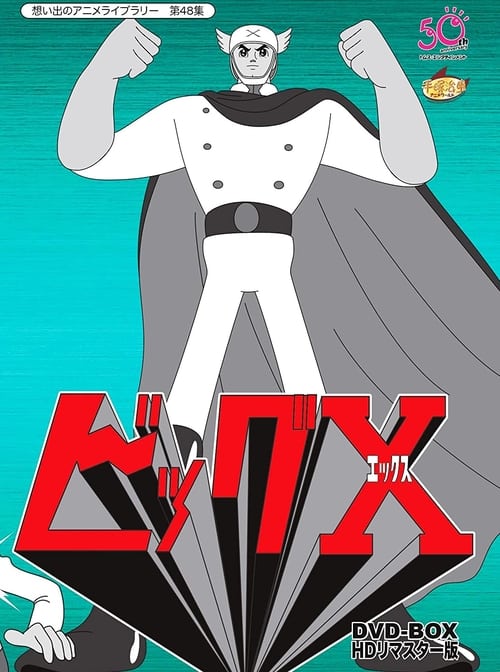
Big X
1964
country: Japan
No overview available
TMDB2.5
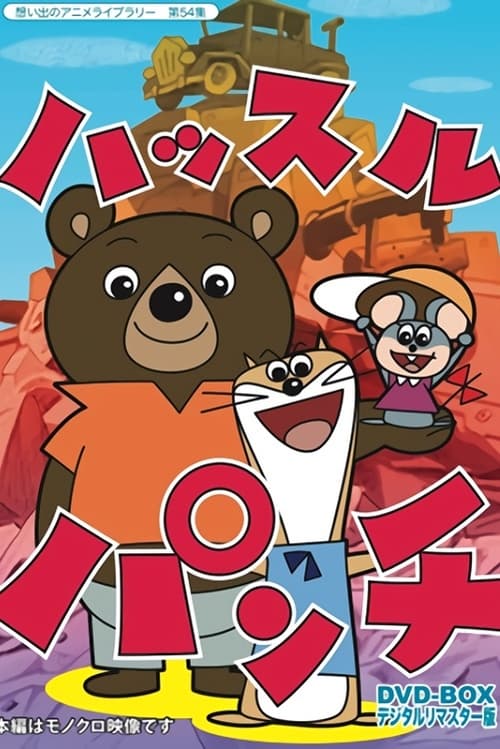
Hustle Punch
1965
country: Japan
No overview available
TMDB3.5
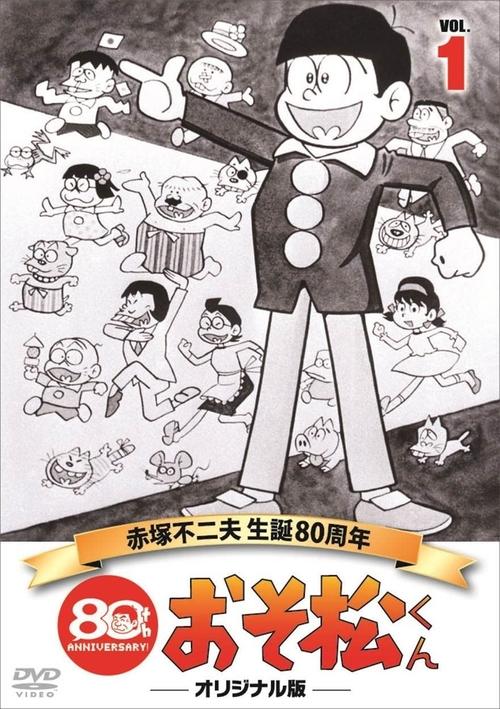
Osomatsu-kun
1966
country: Japan
The first animated adaptation of the 1960s gag manga series, focusing on the adventures of the identical 10-year-old Matsuno sextuplets, led by the titular brother himself. Aside from the Matsunos, the series also showcases the tales of their rival Chibita, and the constantly job-switching conman Iyami.
TMDB3.5
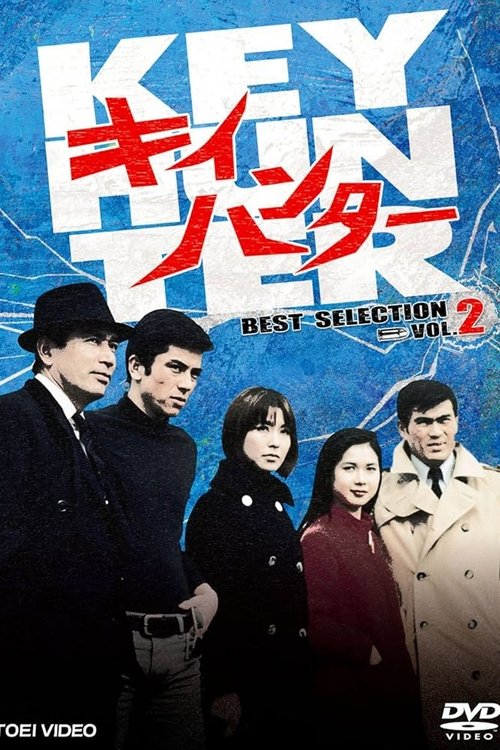
Key Hunter
1968
country: Japan
Key Hunter is a prime-time Japanese television detective series. It aired on Saturday nights in the 9:00–9:56 p.m. time slot on the Tokyo Broadcasting System network from April 6, 1968 to April 7, 1973. There were a total of 262 episodes, and it was one of the most popular action dramas in Japan at the time. The story involved "Key Hunter", a special clandestine unit of the International Police, which endeavored to solve various crimes. "Key Hunter" was a unique TV show, which started out as a grand scale spy thriller never before seen in Japan. The episodes were individually themed on global crimes and political strife. The initial hardboiled theme later evolved to include intellectual elements involving action, and occasionally with comical elements as well. Tetsuro Tamba starred in the 1967 film You Only Live Twice as Japanese Secret Service agent Tiger Tanaka, an ally of James Bond. This role greatly influenced his image in "Key Hunter".
TMDB3.8
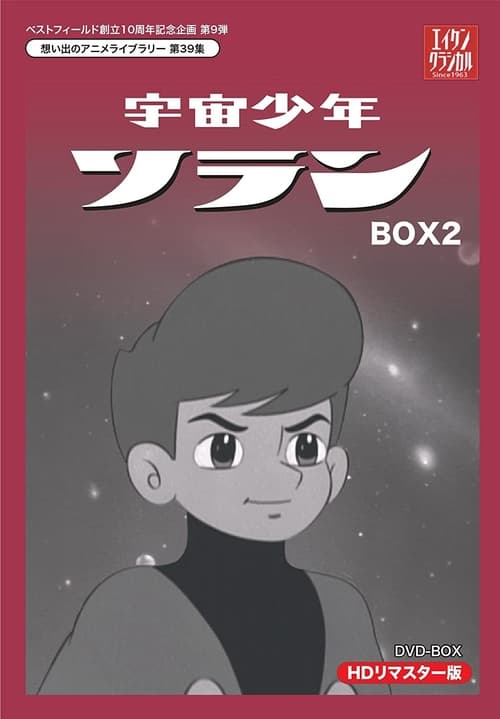
宇宙少年ソラン
1965
country: Japan
No overview available
TMDB3.8
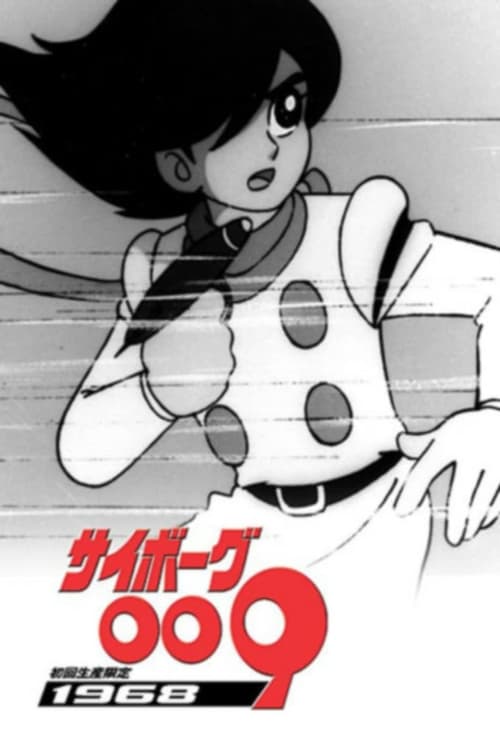
Cyborg 009
1968
country: Japan
No overview available
TMDB3.6
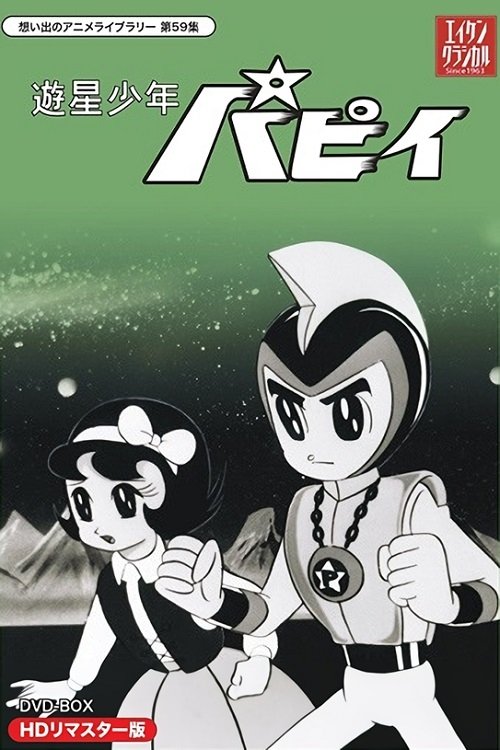
Prince Planet
1965
country: Japan
Prince Planet is the English-language title given to one of the earliest Japanese anime TV series, Planet Boy Papi, when it was transmitted on American television in the United States in the mid-1960s. A 52-episode monochrome anime series, it tells the story of a member of the Universal Peace Corps, originally from the planet Radion, coming to Earth on a mission to determine if this world meets standards for membership in the Galactic Union of Worlds and assist its inhabitants during his stay. While on his mission, Prince Planet adopts the identity of an Earth boy named Bobby and gains comrades who work together alongside him fighting forces of evil, both alien and terrestrial.
TMDB4.3
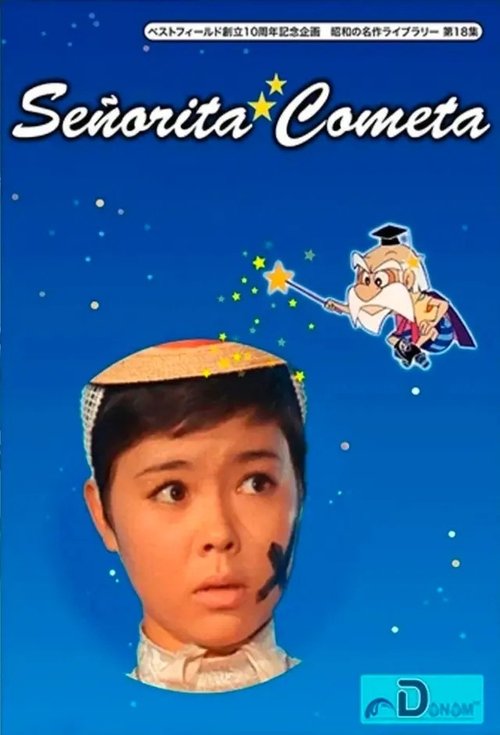
コメットさん
1967
country: Japan
No overview available
TMDB3.8
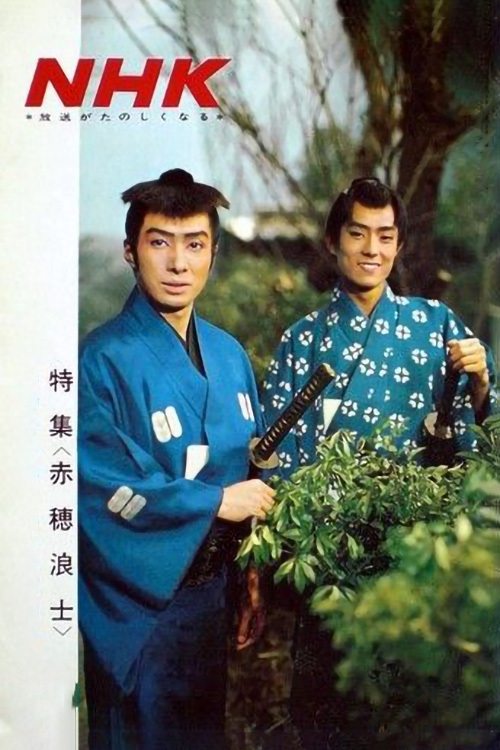
Akō Rōshi
1964
country: Japan
"Ako Roshi" is a group of 47 former retainers of Lord Asano. Lord Asano was forced to commit suicide after attempting to kill Lord Kira. Once the retainers hear about their Lord's death, they sacrifice their lives to regain the honor of their former master.
TMDB4.0
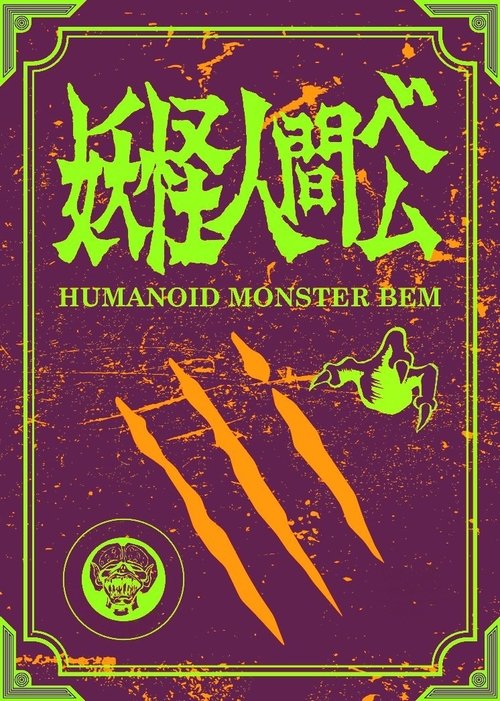
Humanoid Monster Bem
1968
country: Japan
The plot of the series revolves around three yokai (supernatural creatures), Bem, Bela and Belo, who arrive at a large coastal city and come across an evil atmosphere, which was brought about by immoral behavior by humans and mischief caused by monsters and yokai. They therefore decide to stay in the city, fighting against other monsters and yokai which attack humans, making a few friends along the way. Even though the three yokai are often abused and discriminated against by other human beings due to their appearance, they still strive in protecting the human populace of the city from other monsters, one day hoping to become human beings in return for their good actions.
TMDB2.4
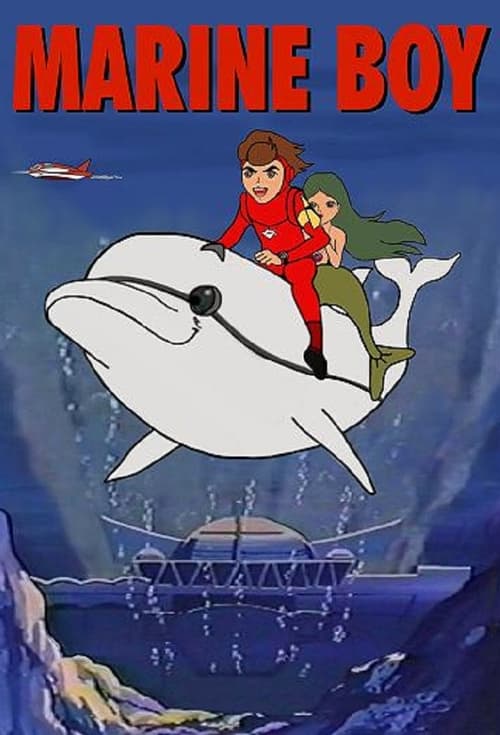
Marine Boy
1966
country: United States
Marine Boy was one of the first color anime cartoons to be shown in a dubbed form in the U.S., and later in Australia and the United Kingdom. It was originally produced in Japan as Undersea Boy Marine by Minoru Adachi and animation company Japan Tele-Cartoons. It was sold outside of Japan via K. Fujita Associates Inc., with Warner Bros / Seven Arts Television handling worldwide distribution of the English-language version.
TMDB3.6
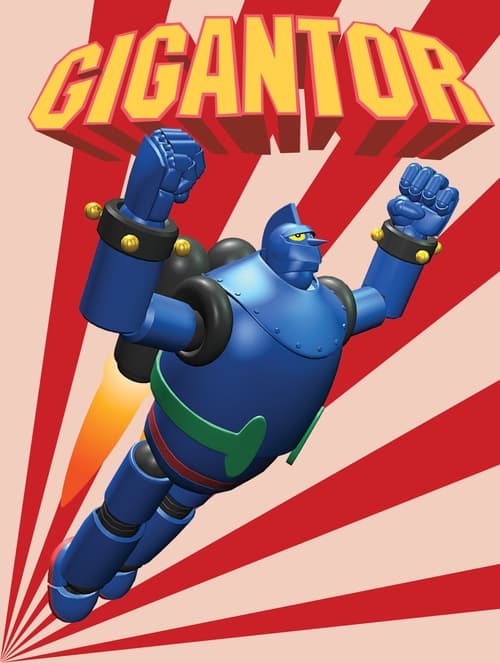
Gigantor
1963
country: Japan
Gigantor is an American adaptation of the anime version of Tetsujin 28-go, a manga by Mitsuteru Yokoyama released in 1956. Jimmy Sparks controls a gigantic, powerful robot and uses it to fight crime. It debuted on U.S. television in 1964. As with Speed Racer, the characters' original names were altered and the original series' violence was toned down for American viewers.
TMDB3.5
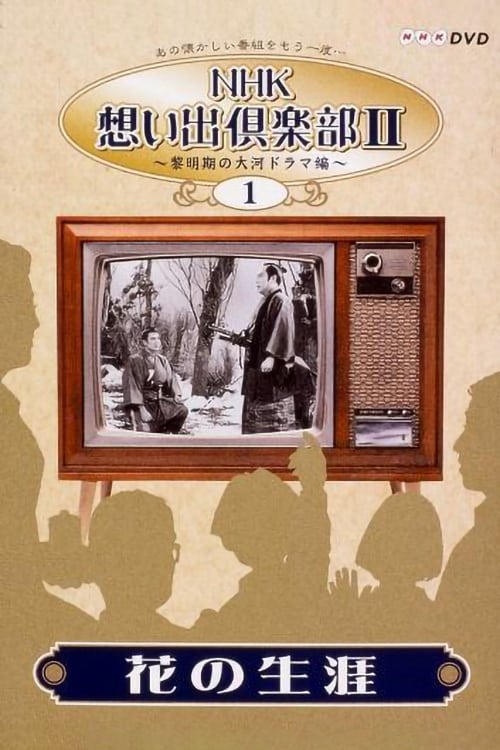
Life of a Flower
1963
country: Japan
The story chronicles the life of Ii Naosuke.

TMDB3.4
Dororo and Hyakkimaru
1969
country: Japan
Hyakkimaru is a young man who lacks 48 body parts because they were taken from him by demons before birth, as payment by his father, Kagemitsu Daigo, to obtain his wish to take over the country. When the baby boy was born he was missing 48 parts of his body, and thus was abandoned—thrown into a river. Hyakkimaru has grown up and now has obtained fake body parts so he can eliminate the 48 demons that were made from his body, and to retrieve his missing parts. Along for the adventure is the boy thief, Dororo, with whom he becomes friends.
TMDB2.8
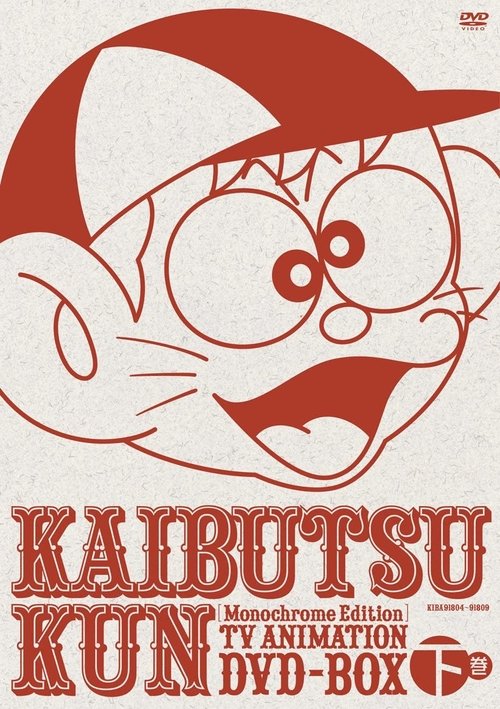
Kaibutsu-kun
1968
country: Japan
The prince of Kaibutsu Land, Kaibutsu-kun, decides to go to the human world as part of his training to become the King.
TMDB4.0
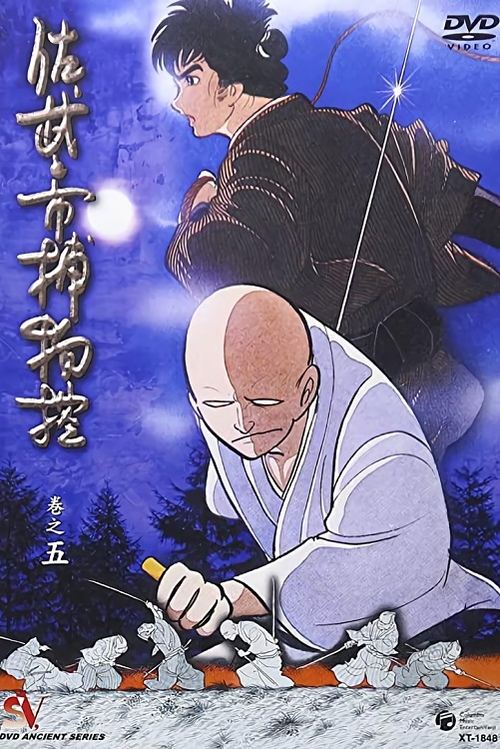
Sabu and Ichi's Detective Stories
1968
country: Japan
The series follows the adventures of Sabu, a young Edo bakufu investigator traveling with the blind master swordsman Ichi. In their travels, they assist the common people in solving mysteries and righting wrongs (usually committed by bandits or corrupt officials). Sabu is engaged to Midori, the daughter of his boss, who works as a police officer for the Tokugawa shogunate.
TMDB0.5
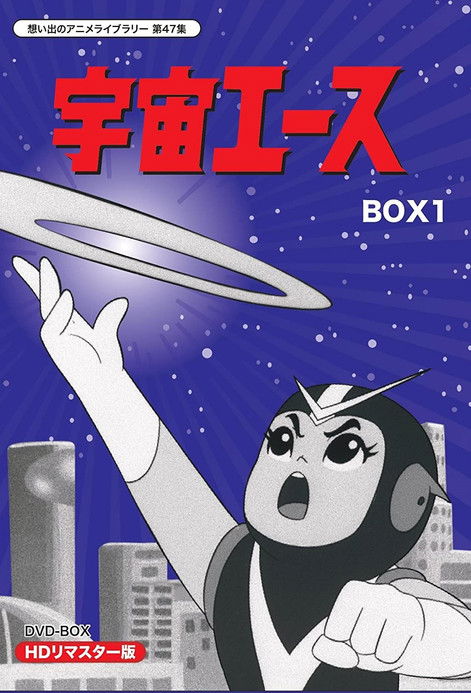
Space Ace
1965
country: Japan
Space Ace is a Japanese science fiction manga series written and illustrated by Tatsuo Yoshida and serialized in Shueisha's Shōnen Book magazine from June 1964 to May 1966. It was adapted into an anime television series by Tatsunoko Production and aired on Fuji TV from May 8, 1965 to April 28, 1966.
About 1960s Japanese TV Shows
The 1960s
1960s television was the medium's first confident decade, when the Western and the variety show gave way to a broader range of genre programming in colour.
Japanese television
Japanese television is dominated by anime and the dorama — short, tightly-run seasons that rarely outstay their premise. Anime in particular has become one of the most globally exported forms of television there is.
In this list
- Most common genres
- Animation, Sci-Fi & Fantasy, Action & Adventure
- Longest run
- 3 seasons
Common questions
- What are the best 1960s Japanese TV shows?
- By popularity across Flickfolio and TMDB, the top picks right now are Sazae-san, Astro Boy, and Ultraman. The full ranked list of 40 sits above — open any show for ratings, reviews, and streaming availability.
- How is this list ranked?
- 1960s Japanese TV shows are ordered by overall popularity, which blends how often a title is viewed, searched, and logged. It updates as viewing habits shift, so the list reflects what people are actually watching rather than a fixed critical canon.
- Where can I watch these TV shows?
- Every show page lists current streaming, rental, and purchase options for your region, alongside community ratings and reviews from Flickfolio members.