1970s Documentary Movies
The 40 most popular 1970s documentary movies, ranked. Click any film for ratings, reviews, trailers, and where to watch.
TMDB3.1
...Remote..... Remote....
1973 · 10m · AT
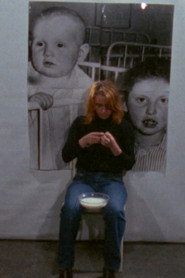
With sometimes painful directness, Valie Export conducts a psychological investigation of the body in this film performance, externalizes an internal state. In front of a police photo showing two children who were sexually abused by their parents, she tortuously cuts into her cuticles until blood drips into a bowl of milk on her lap. On top of the symbolic plane of blood and milk, the physical effect on the viewer of her destructive act of self-mutilation is extreme.
TMDB3.5
Camelamos naquerar
1976 · 17m · ES
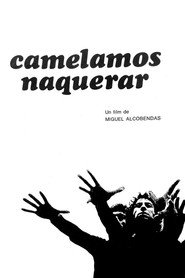
Camelamos naquerar (We Want to Speak) is an adaptation of the theatre play of the same name which was born out of a collaboration between Romani poet and university professor José Heredia Maya and Romani flamenco dancer and choreographer Mario Maya; the latter also performs in the piece, along with other artists. The title in Caló, the language used by Gitanos, translates as ‘we want to speak’, a revolutionary message that illustrates the efforts to reclaim a place in Spanish history for the Roma people and denounce the institutional injustice suffered by the community. It takes as its starting point the Pragmatic decrees signed by the Catholic Monarchs at the end of the fifteenth century, which heralded the long persecution of the Roma people, and continues right up to the twentieth-century Francoist laws.

TMDB3.0
¡Al fútbol!
1975 · 11m · ES
Any given Sunday of 1974 in Spain, soccer games in several stadiums, the sarcastic voice of commentators, the inevitable presence of advertising. Goal! The victors and the defeated.
TMDB4.0
Olavi Virta
1972 · 30m · FI
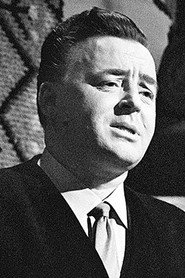
Portrait of a national icon: iskelmä or popular schlager legend Olavi Virta (1915–1972), as an old, lost and lonely man. When the film was screened for the first time, people all over Finland went ballistic – they couldn't take the sad sight of their tango's greatest voice, the incarnation of postwar wealth and glory in ruins.
TMDB1.0
Inês
1974 · 19m · FR
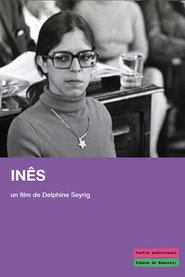
Inês Etienne Romeu was an opponent to the Brazilian's dictatorship. She was kidnapped, tortured and raped in jail, where she stayed for almost 100 days. She was later sentenced to life imprisonment. She stayed ten years in prison, from 1971 to 1979. Delphine Seyrig directed this film in 1974, when Inês was still in prison, protesting against this imprisonment and in support to Inês.
TMDB3.5
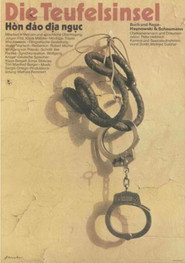
Devil's Island
1976 · 1h 1m
Le Quang Vinh, a revolutionary student leader, was arrested in Saigon in August 1961. A show trial and death sentence followed. World-wide protests altered it to “life imprisonment” on Con Son, the Devil’s Island. The humiliating “Tiger-Cages” and the methods of torture are shown.
TMDB3.3
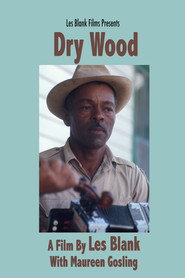
Dry Wood
1973 · 37m · US
Featuring the stories and music of seminal Cajun musicians "Bois Sec" Ardoin and Canray Fontenot, Dry Wood is a short, vibrant documentary portrait of life, food, music and festivity in the Louisiana Delta from the singular Les Blank. Preserved by the Academy Film Archive in 1999.
TMDB4.5
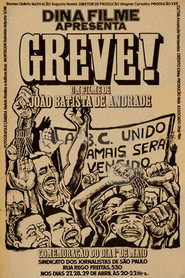
Greve
1979 · 37m · BR
A documentary about the 1979 workers strike.
TMDB3.2
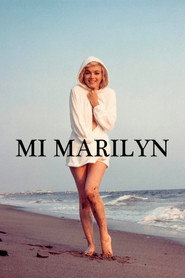
Mi Marilyn
1975 · 14m · ES
A memory of Marilyn Monroe (1926-1962), woman, actress, goddess, myth, in the words of the Spanish director and scriptwriter José Luis Garci, who returns to his childhood and recovers a lost paradise.
TMDB3.4
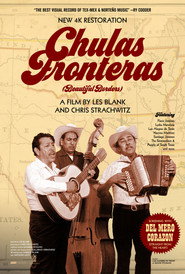
Chulas Fronteras
1976 · 58m · US
A complex, insightful look at the Chicano experience as mirrored in the lives and music of the most acclaimed Norteño musicians of the Texas-Mexican border, including Flaco Jimenez and Lydia Mendoza. Video includes bonus feature, Del Mero Corazon.
TMDB3.1
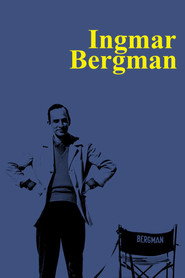
Ingmar Bergman
1972 · 55m · SE
Portrait of Ingmar Bergman, made while he was working on The Touch, about his professional and private life in the early 1970s.
TMDB3.5
The Waterfowl People
1970 · 55m · SU
A documentary about the histoy and linguistic ties of the Finno-Ugric, and Samoyedic peoples. Speakers of the Kamassian, Nenets, Khanty, Komi, Mari, and Karelian languages were filmed in their everyday settings in the late 1960s and early 1970s. The footage was shot in Altai Krai, the Nenets Okrug, Khantia-Mansia, Uzbekistan, the Komi Republic, Mari el, Karelia, and Estonia. The first documentary in Lennart Meri's "Encyclopaedia Cinematographica Gentium Fenno - Ugricarum (1970 - 1997)" series.
TMDB2.6
Scum Manifesto
1976 · 26m · FR
Delphine Seyrig reads passages from a Valerie Solanas’s SCUM manifesto.
LH 615 – Operation München
TMDB4.6
LH 615 – Operation München
1975 · DE
No overview available
TMDB3.2
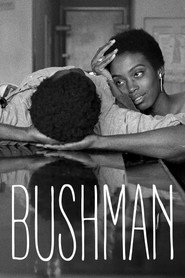
Bushman
1971 · 1h 13m · US
1968: Martin Luther King, Robert Kennedy, and Bobby Hutton are among the recent dead. In Nigeria, the Civil War is entering its second year with no end in sight. In San Francisco, the adventures of Gabriel, a young Nigerian reflects tribal, personal, and racial frictions during the tumultuous sixties. Truth is stranger than fiction in Bushman, a rare sort of film portrait, part document, part imagined – poetic in its approach to real events.
TMDB3.5
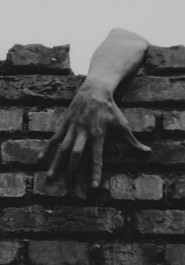
The Hole
1973 · 10m · KR
One of Han Ok-hee’s renowned pieces called The Hole uses the flicker, oblique angles, the cross-cutting of reality and fantasy to express inner entrapment and the desire for liberation. Han Ok-hee’s The Hole, The Rope and Untitled not only experimented with cinematic forms of expression, but also played an important role in the protest against forms of expression in experimental films and the artistic protest against the social suppression and censorship in 1970s Korea. (Art Cinema OFFoff)
Passe Livre
TMDB4.5
Passe Livre
1974 · 1h 14m · BR
Based on the life of the player Afonsinho, who was banned from playing football for growing his beard and hair and refusing to cut them. Fighting for his rights, the player managed to become the owner of his own transfer rights, that is, he obtained a "free transfer". From this incident, the film examines labor relations in Brazilian football.
¡Arriba España!
TMDB3.3
¡Arriba España!
1976 · 2h · FR
Documentary about the Spanish Civil War and its subsequent consequences on the country's society, featuring testimonies from various figures, interviews, and significant photographic and audio documents.
TMDB2.8
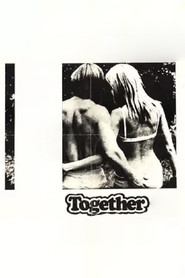
Together
1971 · 1h 7m · US
A mockumentary about sex in America.
TMDB5.0
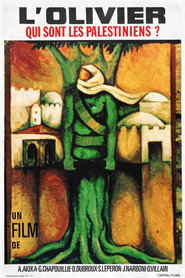
The Olive Tree
1976 · 1h 25m · FR
Filmed between 1973 and 1975, L’Olivier was produced by the Vincennes Cinema Group. This activist collective of teachers and filmmakers, formed on the occasion of this film, attempts to explain the Palestinian problem through interviews. The Olivier was one of the first films to attempt to give substance to what was still largely ignored in the West: the existence of the Palestinian people and their fight to recover their rights. L'Olivier responds to a concern: the already weak support of French public opinion for the Palestinian cause diminished following the Munich operation of 1972. Structured in such a way as to tell the Palestinian story and explain the state of the struggle at the time, the film appeals to global militant solidarity and, in particular, to European political commitments.
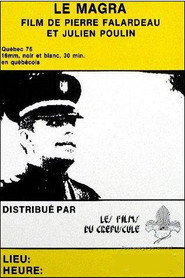
TMDB4.0
Le Magra
1975 · CA
No overview available
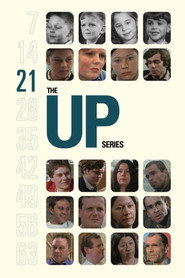
TMDB3.7
21 Up
1977 · 1h 40m · UK
After another 7 year wait, director Michael Apted revisits the same group of British-born children from Seven Up! and 7 Plus Seven. The subjects are interviewed as to the changes that have occurred in their lives during the last seven years.
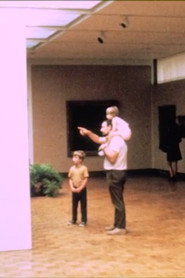
TMDB3.5
This Island
1970 · 31m · US
How the art in the Detroit Institute of Art connects to life's experiences and the neighborhood.
Paulicéia Fantástica
TMDB4.5
Paulicéia Fantástica
1970 · 1h 26m · BR
Documentary wich tries to capture the iconoclastic spirit of the 1922 Week of Modern Art, to tell about the beginning of cinema made in the city of São Paulo.
TMDB2.0
L'Adhésion
1975 · FR
No overview available
TMDB3.8
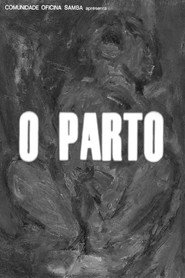
O parto
1975 · 36m · PT
Documentary based on archive material focusing on the dictatorial regimen in Portugal and its fall with the "Revolução dos Cravos" (Carnation Revolution), in 1974, after 48 years of Salazarism.
Facing a Family
TMDB3.0
Facing a Family
1971 · 5m · AT
A family is observed watching television. The viewer becomes the object of the family's gaze, as much as the family is the object of the viewer's gaze.

TMDB3.3
Fata Morgana
1972 · 1h 16m · DE
Shot under extreme conditions and inspired by Mayan creation theory, the film contemplates the illusion of reality and the possibility of capturing for the camera something which is not there. It is about the mirages of nature—and the nature of mirage.
TMDB3.0
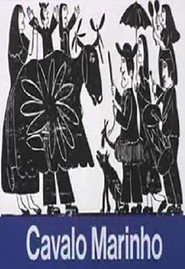
Cavalo Marinho
1979 · BR
No overview available
TMDB3.5
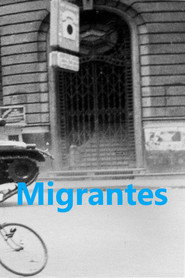
Migrantes
1973 · 7m · BR
Director João Batista de Andrade was filming a documentary about migrants coming from Northeast Brazil to São Paulo in search of a better living. His intention was to give voice to these underprivileged and homeless people. While preparing to interview a man who lived under a bridge, a passer-by interfered, starting an argument about the role of people from other states in the development of São Paulo and the rural problem in the Northeast.
Before Hindsight
TMDB3.5
Before Hindsight
1977 · 1h 22m · UK
Newsreels from the '30s constitute the bulk of this fascinating documentary, clearly illustrating that the public was fed an extremely biased view of events: straight propaganda, the stricture to provide entertainment, and the attempt to be objective all contributing to this. Lewis and producer Elizabeth Taylor-Mead have constructed their argument well, but it is Jonathan Dimbleby's brief comments towards the end that contain the crucial lesson: forty years on, the same forces work to distort our view of Northern Ireland. The film only indicates this to be the case, but it is precise and coherent enough to make the point with considerable force.
TMDB5.0
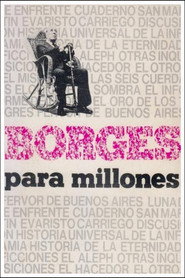
Borges para millones
1978 · 1h 1m · AR
The life and work of Argentinian writer Jorge Luis Borges, a long interview, fragments of some of his most significant verses and dramatizations of some of his stories. Borges for everyone.
Miró tapís
TMDB2.5
Miró tapís
1973 · 22m · ES
Commissioned by the Maeght Gallery with the exhibition of Joan Miró, organized by the French Ministry of Cultural Affairs at the Grand Palais, which opened on May 17, 1974 in Paris. This film was shot in six days in Montroig del Camp (at the Miró) and Tarragona during the implementation process, by Josep Royo, a tapestry by Joan Miró. Five people worked for eight months in the realization of this tapestry, using wool 1200kg and 600kg for the warp. The total weight of 3500kg and a half was six meters wide by 11 meters long. They need a purpose built weaving loom. The day of the attack on the World Trade Center in New York on September 11, 2001, the tapestry was placed in the lobby of one of the towers when they were demolished.
TMDB3.6
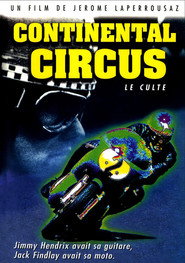
Continental Circus
1972 · 1h 42m · FR
French documentary about the Continental Circus.
TMDB3.6
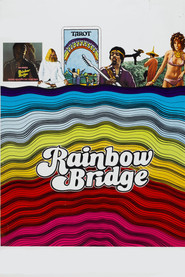
Rainbow Bridge
1972 · 1h 48m · US
A documentary about various singers, musicians, artists, astrologers, etc., who attended a "New Age" gathering in Maui, Hawaii.
TMDB3.5
Ismael Nery
1979 · 7m · BR
Documentary about the painter Ismael Nery, which intersperses daily street scenes with paintings by the artist, under the narration of his 1931 Post-Essencialista poem.
TMDB2.7
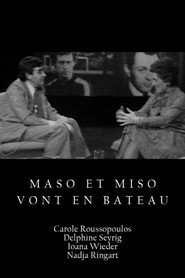
Maso and Miso Go Boating
1976 · 55m · FR
The year 1975 is declared “year of the woman”. On this occasion Bernard Pivot invited Françoise Giroud on television, then Secretary of State for Women. Faced with statements, a group of women filmmakers parody the issues in a provocative way.
Art Nouveau's Prague
TMDB3.6
Art Nouveau's Prague
1974 · 19m
No overview available
Selection
TMDB4.0
Selection
1970 · 41m · HU
SELECTION documents a KISZ (Hungarian Young Communist League) chapter at an oil refinery that is interested in hiring a musical act as entertainment for young workers. The documentary shows the group discussing their criteria for the band, as well as their interviews with the individual bands. It is quickly apparent that the group isn’t interested in any sort of musical talent or the potential audiences’ interest. Rather, they are focused on ideological or moral issues that may be perceived as negative, such as groupies or outfits that are seen as too trendy. They settle on the musical group that is potentially the easiest to control, the youngest band. SELECTION works as a larger metaphor for what censorship was like in Socialist Hungary and was banned from being publicly screened until 1982.
TMDB4.8
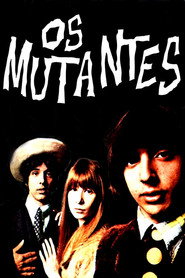
Os Mutantes
1970 · 7m · BR
A mutant prank improvised by Arnaldo Baptista, Sérgio Dias, and Rita Lee. Os Mutantes on a unique day in the streets of São Paulo.
About 1970s Documentary Movies
The 1970s
The 1970s are widely considered American cinema's strongest decade, when the studio system's collapse handed a generation of young directors unusual freedom. It ended with Jaws and Star Wars inventing the modern blockbuster.
Documentary
Documentary covers everything from observational vérité to essay film and true crime. The form's best work argues rather than merely records, and the last two decades of streaming demand have made it a commercial genre as much as an artistic one.
In this list
- Often also
- Music, Drama, TV Movie
Common questions
- What are the best 1970s documentary movies?
- By popularity across Flickfolio and TMDB, the top picks right now are ...Remote..... Remote...., Camelamos naquerar, and ¡Al fútbol!. The full ranked list of 40 sits above — open any movie for ratings, reviews, and streaming availability.
- How is this list ranked?
- 1970s documentary movies are ordered by overall popularity, which blends how often a title is viewed, searched, and logged. It updates as viewing habits shift, so the list reflects what people are actually watching rather than a fixed critical canon.
- Where can I watch these movies?
- Every movie page lists current streaming, rental, and purchase options for your region, alongside community ratings and reviews from Flickfolio members.